Why African Folktales Use Animals So Much
They are teachers, symbols, and storytellers that carry culture across generations.
Explore how animals shape meaning, preserve wisdom, and make complex ideas simple and memorable.
Think about the last story you remember from childhood. Chances are, an animal played a role.
Across African cultures, animals are not just part of stories. They are the story. From clever hares to wise tortoises, these characters carry lessons that feel simple on the surface but reveal deeper truths the more you explore them.
African folktales use animals because they symbolize human traits, simplify complex ideas, and make stories memorable. These narratives preserve cultural values, teach moral lessons, and allow storytellers to address sensitive topics indirectly across generations and communities.
The Core Reason Animals Dominate African Folktales
Animals are widely used because they act as symbolic stand-ins for human behavior. They make stories easier to understand, more engaging, and culturally adaptable across different audiences and regions.
In many African storytelling traditions, animals represent recognizable human traits. The trickster, the wise elder, the greedy ruler, or the naïve youth can all be expressed through animal characters.
This approach serves several purposes:
It removes personal blame when discussing sensitive issues
It allows stories to travel across languages and cultures
It makes abstract ideas concrete and memorable
For example, a cunning hare might represent intelligence used for survival, while a slow but thoughtful tortoise may symbolize patience and wisdom.
By using animals, storytellers create distance between the lesson and the listener. That distance makes it easier to accept difficult truths without feeling targeted.
Animals as Symbols of Human Behavior
Animals in African folktales function as symbolic representations of human qualities such as intelligence, greed, bravery, or foolishness, helping audiences understand complex social behaviors through simple, relatable characters.
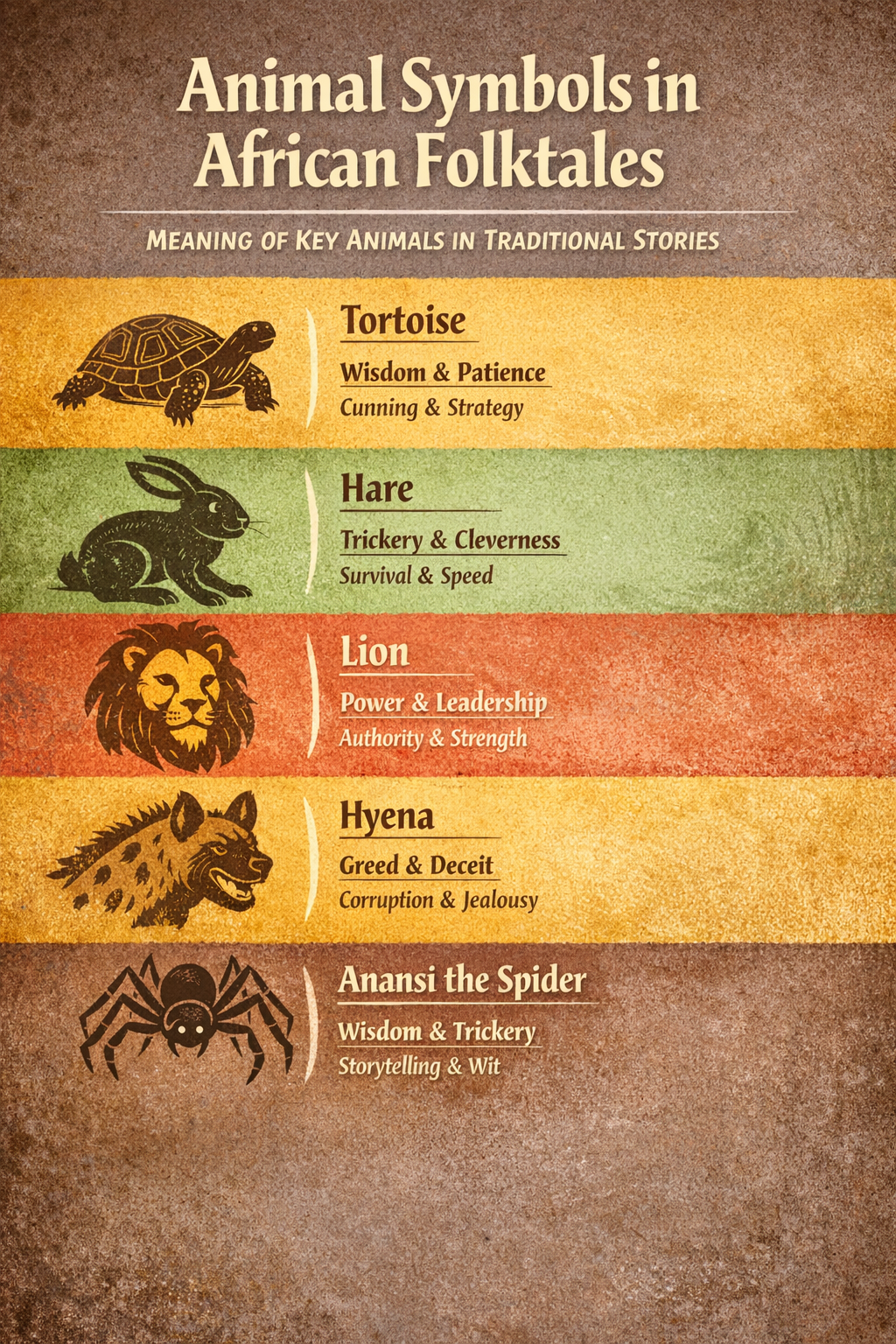
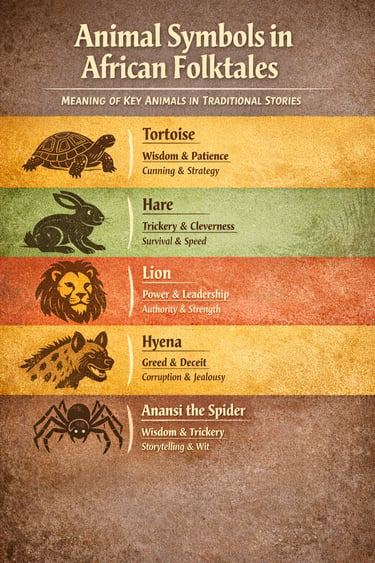
Symbolism is central to African oral traditions. Each animal often carries a consistent meaning across stories.
Common examples include:
Tortoise: Wisdom, patience, sometimes cunning
Hare: Trickery, cleverness, survival instinct
Lion: Authority, power, leadership
Hyena: Greed, selfishness, moral corruption
Spider (Anansi): Intelligence, storytelling, strategy
These symbols allow listeners to quickly grasp the message without lengthy explanations.
Instead of saying “a greedy person loses respect,” a story might show a hyena hoarding food and facing consequences. The lesson becomes visual, emotional, and easier to remember.
This symbolic system also creates a shared cultural language. Once you understand the animal, you understand the message.
Why Animals Make Stories Easier to Remember
Animal characters simplify storytelling by making narratives more vivid, engaging, and easier to recall, especially in oral traditions where memory plays a critical role in preserving knowledge.
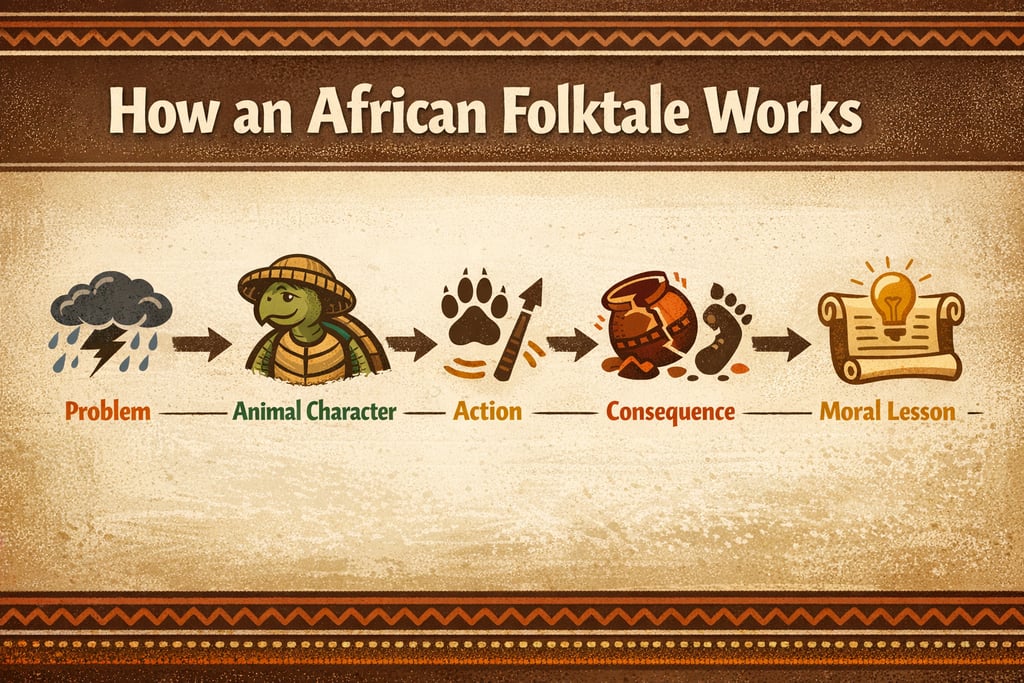
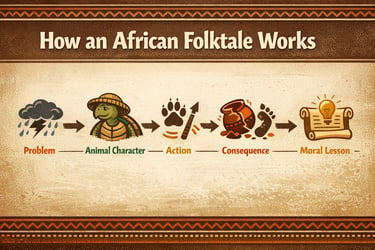
African folktales were traditionally passed down orally, not written.
That means stories had to be:
Easy to remember
Engaging to listen to
Clear in their message
Animals help achieve all three.
They create strong mental images. A talking tortoise or a laughing hyena sticks in the mind more than abstract human characters.
They also allow repetition and rhythm, which are key features of oral storytelling. For example, a story may repeat actions or phrases tied to a specific animal trait, reinforcing memory.
In many communities, storytelling happens in group settings, often involving children. Animal characters naturally capture attention and encourage participation.
Teaching Moral Lessons Without Direct Criticism
Using animals allows storytellers to teach moral lessons indirectly, avoiding direct criticism of individuals or authority figures while still addressing important social and ethical issues.
In many societies, openly criticizing leaders or elders can be sensitive or discouraged.
Animal stories provide a safe way to explore these topics.
For example:
A greedy lion may represent a corrupt leader
A foolish monkey might reflect poor decision-making
A dishonest hyena could highlight social injustice
Because the characters are animals, the story avoids direct confrontation. Yet the message remains clear.
This indirect approach makes folktales powerful tools for:
Social critique
Ethical teaching
Community reflection
Listeners can interpret the story in their own way, which often leads to deeper understanding.
Cultural Identity and Shared Knowledge
Animal-based folktales help preserve cultural identity by carrying shared values, beliefs, and traditions across generations, especially in communities where oral storytelling is central.
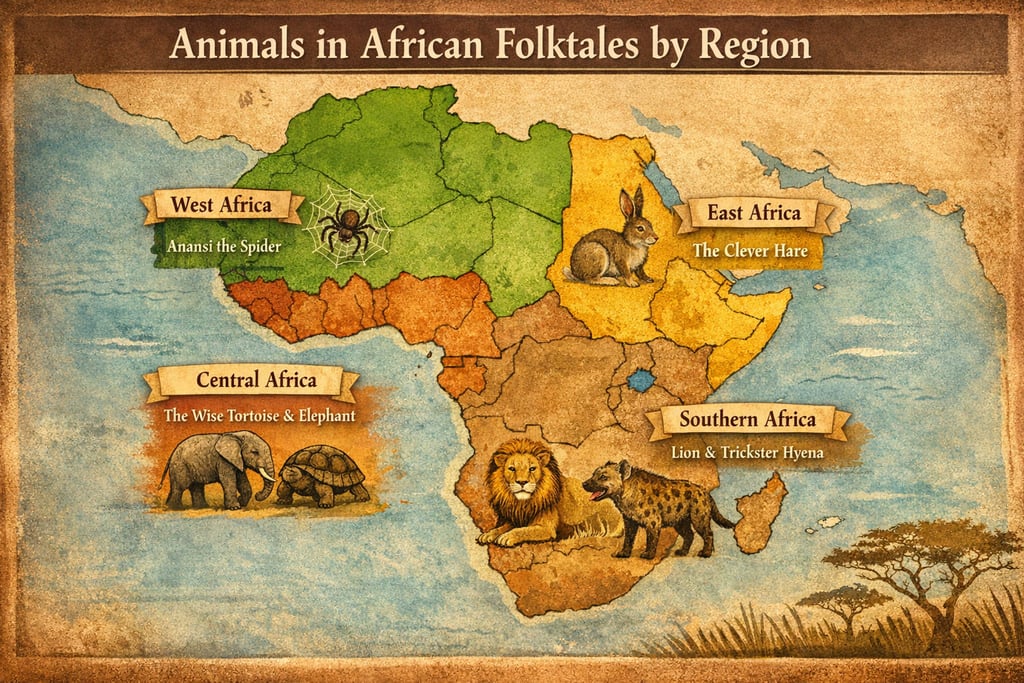
African folktales are not just entertainment. They are a form of cultural memory.
Through these stories, communities pass down:
Social norms
Survival strategies
Historical perspectives
Spiritual beliefs
Animals play a key role because they are familiar to the environment. Each region uses animals that are locally known, making the stories feel relevant and grounded.
For example:
Savannah regions may feature lions, elephants, and hyenas
Forest regions may include monkeys, birds, and smaller mammals
This connection between story and environment strengthens cultural identity.
It also ensures that stories remain adaptable. As environments and societies change, new meanings can emerge while the core structure remains intact.
Many of these patterns become even clearer when you look at origin stories. In African Creation Myth Explained, animals often appear alongside humans or act as messengers between the natural and spiritual worlds.
This shows that animals are not just teaching tools. They are part of how many African traditions understand life itself, where nature, humans, and the unseen world are closely connected.
The Role of Trickster Animals in African Folklore
Trickster animals are central figures in African folktales, representing intelligence, adaptability, and the ability to challenge power structures through wit rather than strength.
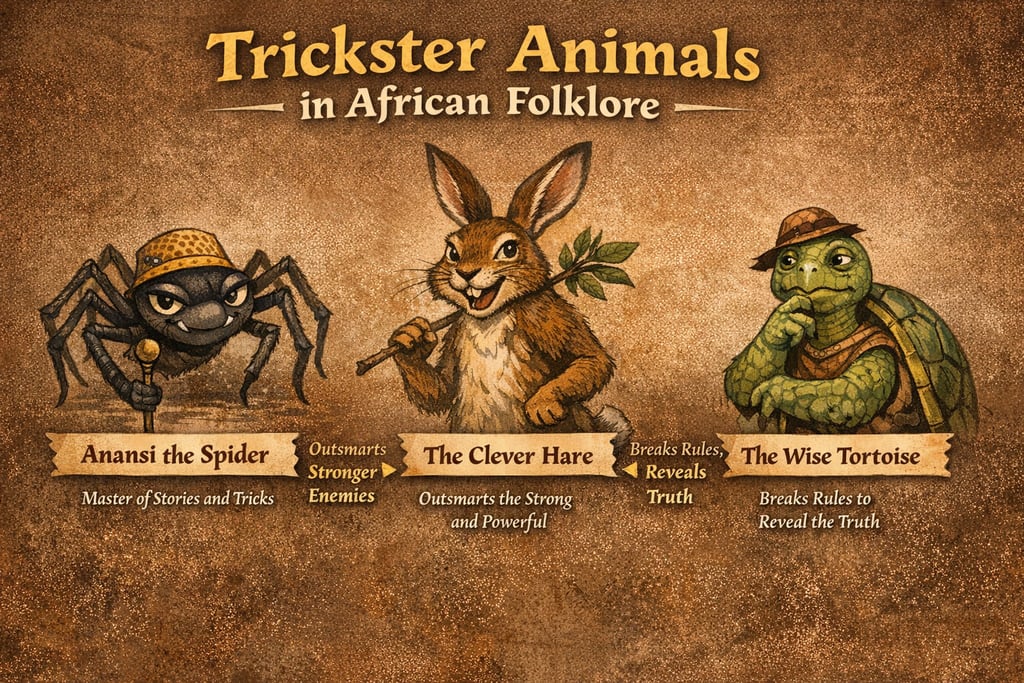
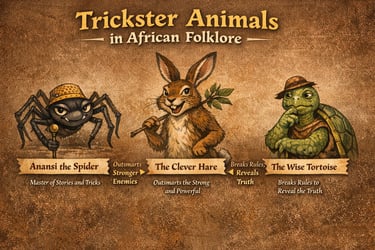
One of the most famous elements of African folklore is the trickster figure.
Characters like:
Anansi the spider (West Africa)
The hare (various regions)
The tortoise (widely known)
These characters often:
Outsmart stronger opponents
Break rules or expectations
Reveal hidden truths
The trickster serves an important social function.
They show that intelligence can overcome power. They challenge authority in ways that feel safe and acceptable. They also reflect real-life struggles, where survival often depends on creativity rather than strength.
These stories resonate across generations because they mirror human experience in a relatable way.
Why Animals Cross Language and Cultural Barriers
Animal-based storytelling transcends language differences because animal behaviors and traits are universally recognizable, making the stories accessible across diverse cultures and communities.
Africa is home to thousands of languages and cultures.
Using animals creates a shared storytelling framework that can move across these differences.
Even if the language changes, the meaning remains clear.
A clever animal outwitting a stronger one is a concept that anyone can understand. This universality helps stories travel, adapt, and survive over time.
It also explains why many African folktales have influenced global storytelling traditions.
Psychological Impact of Animal Characters
Animal characters engage audiences emotionally and psychologically by reducing resistance to moral lessons and encouraging empathy, making stories more effective in shaping behavior and understanding.
When people hear stories about humans, they may feel judged or defensive.
Animals remove that barrier.
They create emotional distance, which allows listeners to reflect more openly. At the same time, they remain relatable enough to evoke empathy.
Children, in particular, respond strongly to animal characters. This makes folktales effective tools for early learning and behavioral development.
Research in storytelling psychology shows that metaphor and symbolism improve retention and emotional engagement. African folktales naturally use both.
The Evolution of Animal Folktales in Modern Media
Animal-based folktales continue to influence modern storytelling, appearing in books, films, and digital media while retaining their core role as tools for teaching values and cultural narratives.
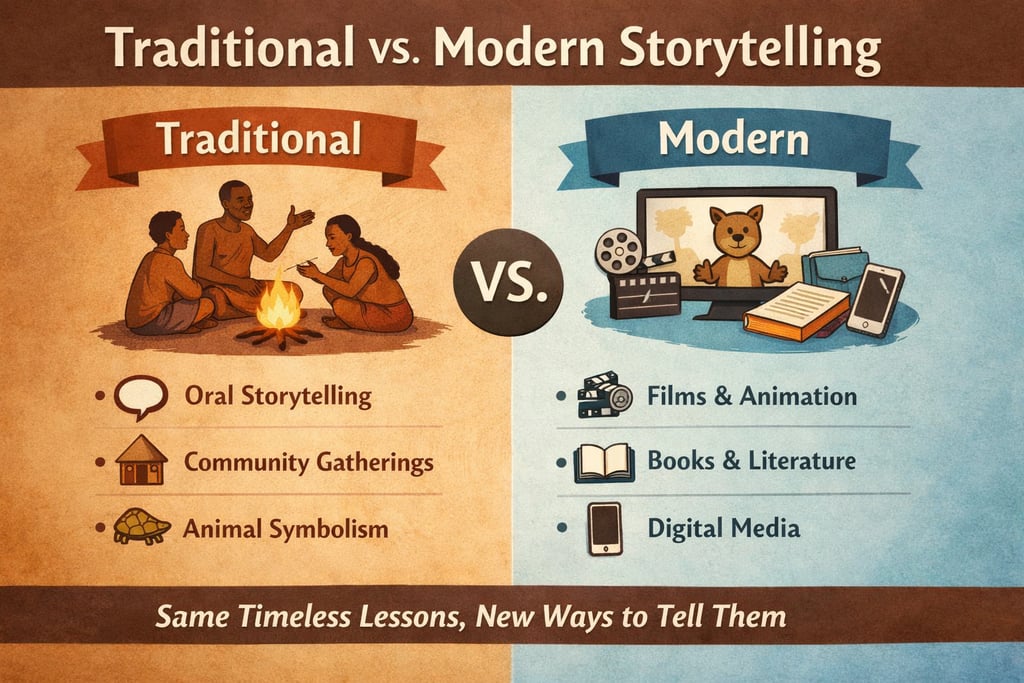
The use of animals in storytelling has not disappeared. It has evolved.
You can see its influence in:
Animated films
Children’s literature
Educational content
Digital storytelling platforms
Many modern stories still follow the same structure found in traditional African folktales.
The difference is the medium, not the message.
This continuity highlights the lasting relevance of animal symbolism. It also shows how traditional knowledge can adapt without losing its meaning.
Key Takeaways
African folktales use animals because they simplify complex ideas, symbolize human traits, preserve culture, and make storytelling engaging, memorable, and adaptable across generations.
To summarize the deeper insights:
Animals act as symbolic representations of human behavior
They make stories easier to remember and share
They allow indirect teaching of moral and social lessons
They preserve cultural identity and shared knowledge
They cross language and cultural barriers
They remain relevant in modern storytelling
Understanding this framework helps you read folktales with greater depth and awareness.
Frequently Asked Questions
Why do African folktales often feature trickster animals?
Trickster animals represent intelligence and adaptability. They show how wit can overcome strength and often challenge authority in a safe, symbolic way. These stories reflect real-life survival strategies and social dynamics.
Are animal characters unique to African folktales?
No, many cultures use animals in storytelling. However, African folktales use them more systematically as symbolic tools tied to specific traits, cultural values, and teaching methods rooted in oral traditions.
What is the purpose of using animals instead of humans?
Animals create emotional distance, making it easier to discuss sensitive topics. They also simplify complex ideas and make stories more engaging, especially for younger audiences and oral storytelling settings.
Do animal meanings stay the same across different regions?
Some meanings are consistent, like the lion representing power. Others vary based on local culture and environment. Each community may assign slightly different traits to the same animal.
How do African folktales influence modern storytelling?
They shape narrative structures, character archetypes, and moral storytelling. Many modern stories, especially in children’s media, still use animal characters to teach lessons in a similar way.
Understanding African folktales is not just about stories. It is about seeing how culture, psychology, and communication come together in a powerful way.
If you want to go deeper, start exploring related topics like symbolism, oral traditions, and global storytelling patterns.
Clear, practical, and grounded knowledge helps you see stories differently and use them more effectively.
usefulservices24@gmail.com
© 2026 Tales of Africa. All rights reserved. Powered by MSGDigitals.com