East African Trickster Tales Explained and Their Cultural Meaning
East African trickster tales are traditional folk stories where clever characters like Hare, Spider, or Tortoise outsmart stronger opponents. These stories entertain audiences while teaching moral lessons about intelligence, survival, social norms, and human behavior.
CULTURE
Godha
2/15/20268 min read
East African Trickster Tales
For centuries, trickster tales have been a central part of storytelling across East Africa. Elders, parents, and community storytellers have used them to pass down wisdom, social rules, and cultural values.
Unlike heroic myths that celebrate strength or power, trickster tales celebrate cleverness. The hero is often small, underestimated, or even flawed. Yet through wit and cunning, the trickster finds ways to overcome stronger rivals.
These stories appear across many East African cultures including the Swahili coast, the Great Lakes region, Ethiopia, Kenya, Tanzania, and Uganda. Each region adapts the characters and plots, but the deeper themes remain surprisingly consistent.
Understanding these tales gives you insight into African oral literature, cultural psychology, and the ways communities historically taught life skills to younger generations.
What Are East African Trickster Tales?
East African trickster tales are folktales centered on a clever character who uses intelligence, deception, or humor to outwit stronger opponents. These stories entertain listeners while teaching lessons about survival, morality, and social behavior.
In many East African traditions, the trickster is neither purely good nor purely bad. Instead, the character operates somewhere in the middle.
They lie.
They cheat.
They manipulate others.
Yet audiences still root for them.
Why?
Because the trickster often represents ordinary people living under difficult conditions. Strength and power usually belong to kings, predators, or wealthy figures. The trickster survives through intelligence.
This narrative pattern appears across multiple cultures.
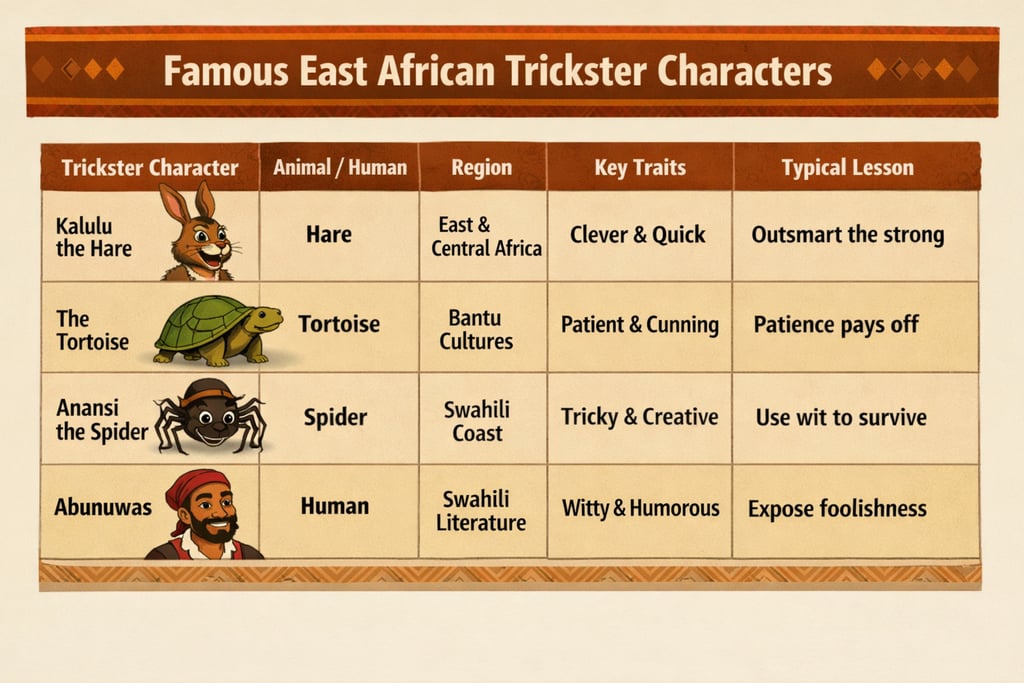
Some of the most famous tricksters in East Africa include:
Kalulu the Hare (Central and East Africa)
Anansi the Spider (West Africa but also known along the Swahili coast)
The Tortoise in many Bantu and Nilotic traditions
Abunuwas, a humorous trickster figure in Swahili literature
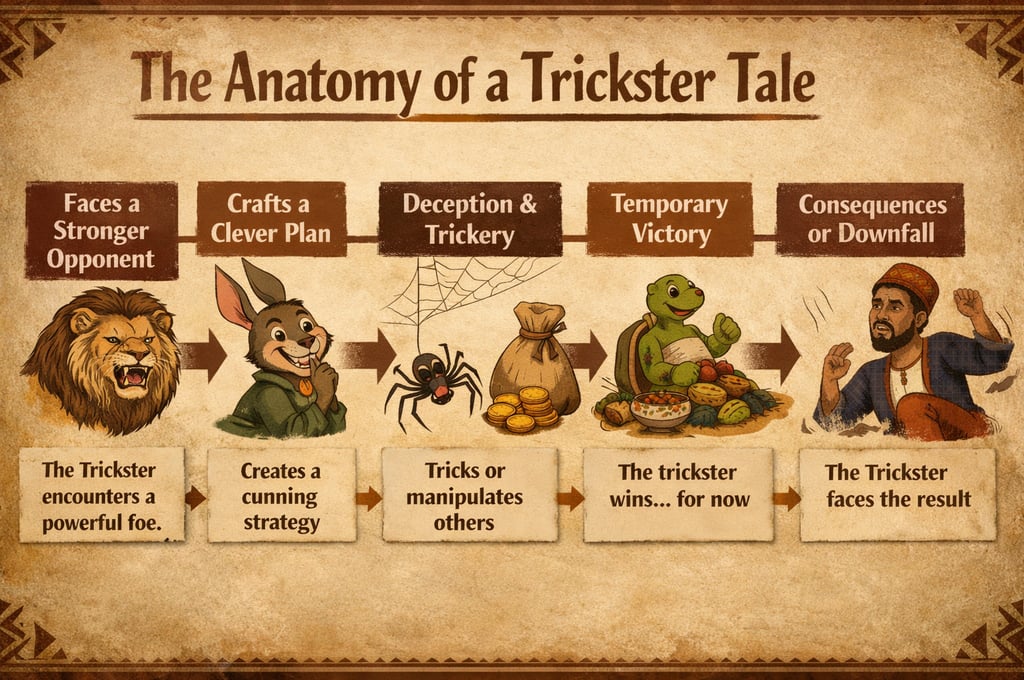
Although the characters differ, the storytelling structure often follows a predictable cycle:
Trickster faces a stronger opponent
Trickster creates a clever plan
Plan works temporarily
Trickster sometimes suffers consequences
This pattern keeps the story entertaining while reminding listeners that intelligence must still be balanced with wisdom.
Why Trickster Tales Matter in East African Culture
Trickster tales play an educational role in East African societies. They teach survival skills, social awareness, moral judgment, and community values through memorable storytelling.
Before widespread literacy, storytelling functioned as a primary teaching system. Trickster tales helped communities pass down knowledge across generations.
They often addressed practical problems people faced in daily life.
For example:
dealing with powerful leaders
navigating social conflicts
recognizing deception
surviving scarcity
thinking creatively
Because the trickster often breaks rules, the audience learns by observing consequences rather than hearing strict moral lectures.
This indirect teaching method makes the lessons easier to remember.
Anthropologists studying African oral traditions often note that trickster stories help listeners understand social intelligence, not just morality.
Instead of asking:
“What is right?”
These stories often ask:
“How do people actually behave?”
Who Are the Most Famous Tricksters in East African Folklore?
The most famous East African tricksters include Kalulu the Hare, the Tortoise, Anansi the Spider, and Abunuwas. Each character represents cleverness, adaptability, and the ability to overcome stronger opponents through strategy.
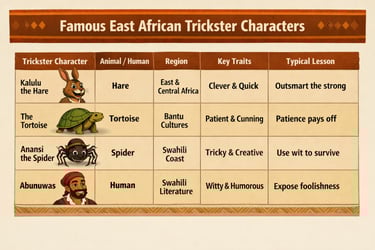
Different regions developed their own trickster characters, but several figures appear repeatedly across oral traditions.
Kalulu the Hare
Kalulu is one of the most recognizable tricksters across East and Central Africa.
Hares are small and vulnerable animals, which makes them perfect symbols for clever survival. In many stories Kalulu tricks lions, elephants, and hyenas.
Common Kalulu themes include:
using language to confuse enemies
pretending to cooperate while planning deception
turning physical weakness into an advantage
Many researchers consider Kalulu stories an early form of psychological storytelling. They show how persuasion and misdirection work.
The Tortoise
The tortoise appears in many African storytelling traditions.
Unlike the hare, the tortoise is slow and physically unimpressive. Yet the tortoise wins through patience and planning.
A famous tortoise story involves convincing birds to lend him feathers so he can attend a feast in the sky. He then eats all the food himself, angering the birds and falling from the sky when they take their feathers back.
This type of story teaches two lessons at once:
cleverness can create opportunities
greed can destroy them
Anansi the Spider
Anansi originated in West African Akan traditions but spread widely through trade networks and migration.
Along the East African coast, especially in Swahili storytelling, Anansi appears in adapted versions of older stories.
Anansi represents creativity, storytelling, and cunning intelligence.
In many tales, Anansi tricks animals larger than himself such as:
elephants
snakes
tigers
spirits
You can read more about Anansi traditions through resources like the Encyclopaedia Britannica overview of Anansi.
Abunuwas
Abunuwas appears in Swahili folklore and literature.
Unlike animal tricksters, Abunuwas is a human character. He is known for humorous stories where he outsmarts wealthy merchants, rulers, or authority figures.
His stories often use absurd logic or exaggerated misunderstandings to expose hypocrisy.
Because of this, Abunuwa's stories became popular entertainment along the Swahili coast.
How Trickster Tales Are Told in East African Oral Tradition
East African trickster tales are traditionally told through oral storytelling sessions that involve audience participation, rhythmic language, and call and response patterns.
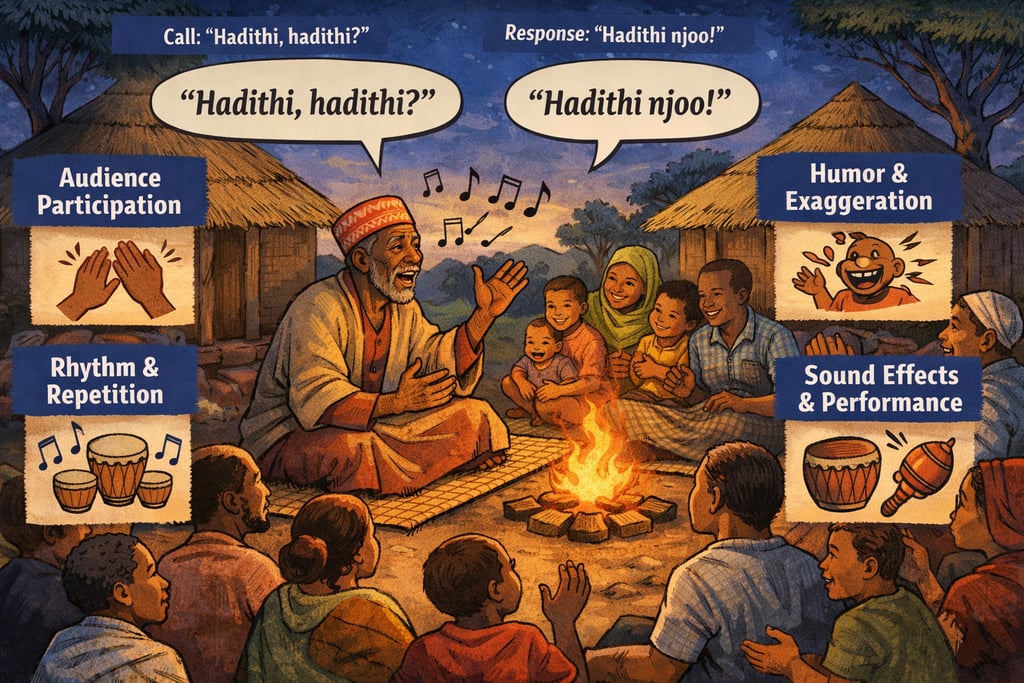
Storytelling in East Africa is rarely passive.
Listeners participate actively through:
repeated phrases
songs
sound effects
collective responses
A storyteller might begin with an opening line that signals a story is starting. In Swahili traditions, a common call is:
“Hadithi, hadithi?”
(Story, story?)
The audience replies:
“Hadithi njoo!”
(Let the story come!)
This ritual immediately creates a shared storytelling space.
Storytellers also adapt tales depending on their audience.
For children, the story might emphasize humor and simple lessons.
For adults, the same story might highlight political satire or social criticism.
This flexibility explains why trickster tales remain culturally relevant even after centuries.
Organizations like UNESCO's Intangible Cultural Heritage program recognizes oral storytelling as an important cultural tradition worth preserving.
What Moral Lessons Do Trickster Tales Teach?
Trickster tales teach lessons about intelligence, humility, greed, deception, cooperation, and the consequences of selfish behavior.
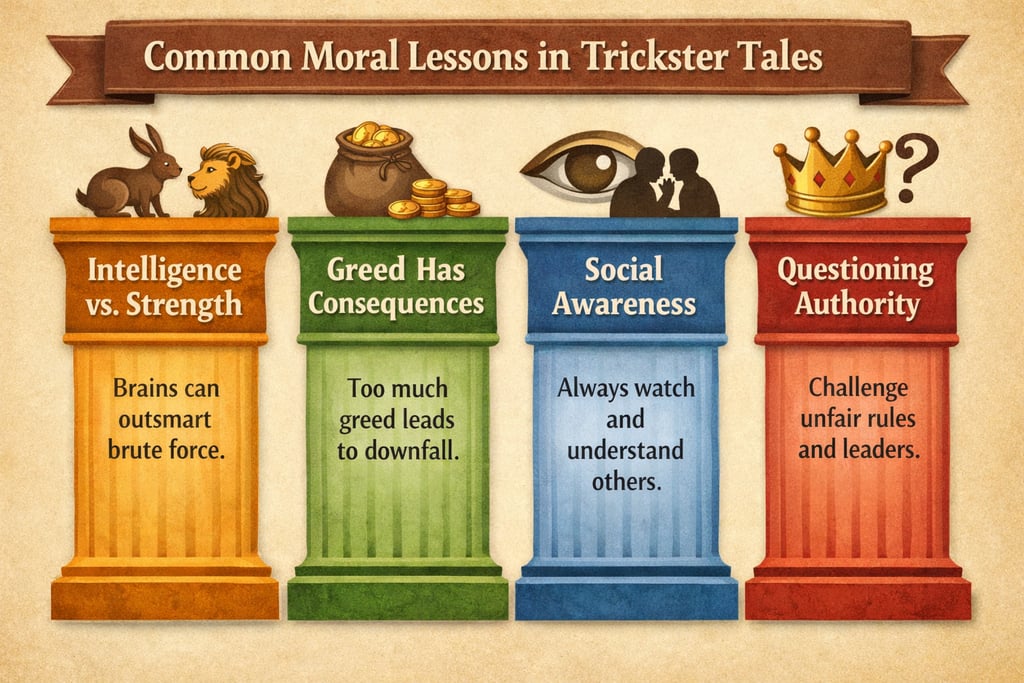
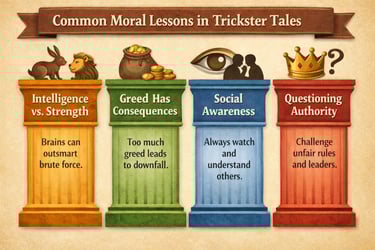
Many readers expect folktales to present clear moral rules.
Trickster tales are different.
The lessons are often ambiguous.
A trickster may succeed through deception. In some stories, they win. In others, they suffer consequences.
This ambiguity reflects real life.
Common moral themes include:
Intelligence vs Strength
Many stories show that physical power does not guarantee success.
Small characters can defeat larger enemies through strategy.
Greed Has Consequences
Tricksters frequently push their luck too far.
When greed becomes excessive, the trick backfires.
Social Awareness Matters
Characters who trust too easily often lose.
These stories teach listeners to observe others carefully.
Rules Can Be Questioned
Some stories subtly challenge authority figures.
When leaders act unfairly, the trickster exposes their weakness.
Trickster stories are only one part of a much larger storytelling tradition in Africa. Many communities also preserve wisdom through proverbs, hero legends, origin stories, and moral narratives that explain proper behavior in society.
In my related guide on Moral Lessons in African Folklore and Oral Traditions, I explore how these different story types work together to teach values such as responsibility, cooperation, and respect for community rules.
Trickster tales often add complexity to those lessons by showing what happens when characters bend or challenge those rules.
What Storytelling Techniques Make Trickster Tales Memorable?
Trickster tales use repetition, exaggeration, humor, and suspense to make stories engaging and easy to remember.
Oral storytelling must hold attention without written text. East African storytellers developed several techniques to make stories memorable.
Repetition
Key phrases repeat throughout the story.
This helps listeners anticipate events and remember the narrative.
Exaggeration
Trickster stories often exaggerate situations for humor.
For example, a spider might defeat a giant animal through an absurd plan.
The exaggeration highlights the cleverness of the solution.
Suspense
The audience usually knows the trickster is planning something.
But the details remain hidden until the final moment.
This builds anticipation.
Humor
Humor plays a major role in these stories.
Even when the trickster behaves badly, the humor keeps audiences entertained rather than judgmental.
How Trickster Tales Spread Across Africa and Beyond
Trickster tales spread through migration, trade routes, and oral storytelling traditions. Over time they traveled beyond Africa to the Caribbean and the Americas through the African diaspora.
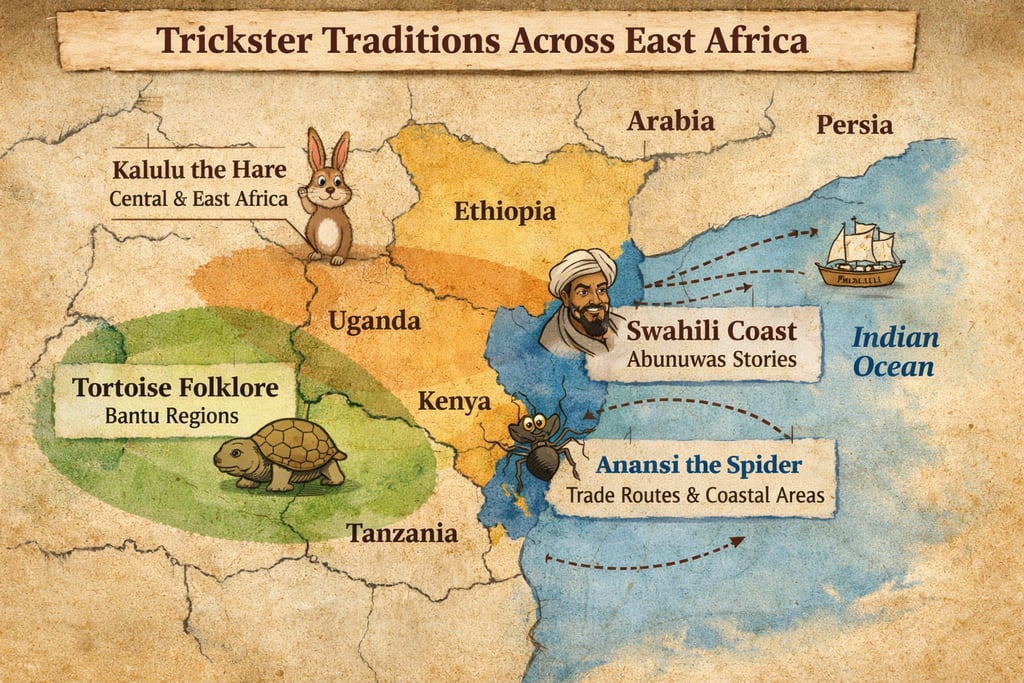
African storytelling traditions moved widely through historical trade networks.
The Indian Ocean trade routes connected East Africa with Arabia, Persia, India, and Southeast Asia.
This exchange helped spread storytelling traditions along the Swahili coast.
Later, the transatlantic slave trade carried African folklore to the Caribbean and the Americas.
Many famous stories in the Americas trace their roots to African trickster traditions.
Examples include:
Br'er Rabbit stories in the United States
Anansi stories in Jamaica and the Caribbean
Caribbean spider folklore
These stories kept cultural memory alive even after communities were displaced.
Researchers studying folklore often trace these connections through narrative patterns and character similarities.
How Trickster Tales Reflect Human Psychology
Trickster tales explore human psychology by highlighting deception, creativity, social manipulation, and the consequences of selfish behavior.
Modern scholars often analyze trickster stories through psychology and anthropology.
The trickster character represents several universal human traits:
curiosity
rule breaking
creativity
survival instinct
Psychologist Carl Jung described the trickster as a universal archetype.
This archetype appears in mythologies across the world.
In East African storytelling, the trickster reflects everyday struggles.
People facing limited resources or social inequality often rely on intelligence rather than force.
The stories validate this strategy.
At the same time, they warn against excessive selfishness.
Common Misunderstandings About Trickster Tales
Many people misunderstand trickster tales as simple children's stories. In reality they contain complex social commentary, cultural values, and psychological insight.
Several misconceptions appear frequently.
Mistake 1: Assuming They Are Only Children's Stories
Many trickster stories were originally told to mixed audiences.
Adults often interpret deeper meanings related to politics or social conflict.
Mistake 2: Treating the Trickster as a Hero
The trickster is not always admirable.
Their flaws are part of the lesson.
Mistake 3: Ignoring Cultural Context
Different communities interpret the same story differently.
A trick that seems funny in one culture may carry serious moral weight in another.
How Scholars Study Trickster Tales Today
Scholars study trickster tales through folklore analysis, anthropology, linguistics, and cultural history to understand storytelling traditions and social values.
Modern research focuses on several areas.
Oral Narrative Structure
Researchers analyze how stories are structured and transmitted across generations.
Cultural Identity
Trickster tales often reflect community values and social tensions.
Studying them helps scholars understand cultural identity.
Language Preservation
Many trickster stories are preserved in indigenous languages.
Documenting these stories helps preserve linguistic heritage.
Organizations and archives collect recordings of oral storytelling to protect these traditions for future generations.
FAQ About East African Trickster Tales
What animals commonly appear in East African trickster stories?
Common trickster animals include the hare, tortoise, spider, hyena, and monkey. These animals represent different personality traits such as cleverness, patience, or deception.
Are trickster tales unique to Africa?
No. Trickster characters appear in many cultures worldwide. Examples include Loki in Norse mythology and Coyote in Native American stories. African trickster tales remain among the oldest and most influential traditions.
Why are trickster characters often small animals?
Small animals symbolize vulnerability. Their success through clever thinking teaches listeners that intelligence can overcome physical disadvantages.
Do trickster tales always end with a moral lesson?
Not always. Some stories leave the lesson open for interpretation. This encourages listeners to think about the consequences of the trickster's actions.
Are trickster tales still told in East Africa today?
Yes. Storytelling continues in families, schools, and cultural festivals. Modern authors and filmmakers also adapt traditional trickster stories for contemporary audiences.
East African trickster tales remain one of the richest storytelling traditions in the world.
They blend humor, strategy, cultural wisdom, and psychological insight into stories that have survived for centuries. Through clever characters and surprising plots, these tales continue teaching one timeless lesson.
Sometimes intelligence is the most powerful tool of all.
About The Author
Mubashir Shakoor Godha is a blogger, digital marketer, and SEO specialist based in Pakistan. He started his journey in 2019 on Blogger.com and has since built and managed multiple websites that rank on Google and AI driven search platforms.
He is also the Founder of MSG Digitals, Top Rated Digital Marketing Agency in Pakistan, where he helps businesses grow through SEO, content strategy, and performance marketing.

usefulservices24@gmail.com
© 2026 Tales of Africa. All rights reserved. Powered by MSGDigitals.com