Moral Lessons in African Folklore and Oral Traditions
African folklore and oral traditions teach moral lessons about community responsibility, honesty, wisdom, respect for elders, and the consequences of greed or arrogance. These stories pass ethical values across generations through memorable characters, symbolism, and practical life guidance.
CULTURE
Godha
2/16/20267 min read
What Moral Lessons Do African Folklore and Oral Traditions Teach?
African storytelling traditions are not just entertainment. They are cultural knowledge systems that guide behavior, shape social values, and strengthen community identity.
Across hundreds of African societies, oral narratives teach listeners how to live responsibly within families, communities, and nature. Many stories also serve as informal education systems, especially where written texts were historically less common.
Understanding the moral lessons in African folklore and oral traditions reveals how storytelling functions as a powerful tool for ethics, leadership training, and social cohesion.
What Is African Folklore and Oral Tradition?
African folklore and oral traditions are storytelling practices used to transmit cultural knowledge, moral lessons, history, and social values across generations. They include myths, legends, folktales, proverbs, songs, and ritual narratives.
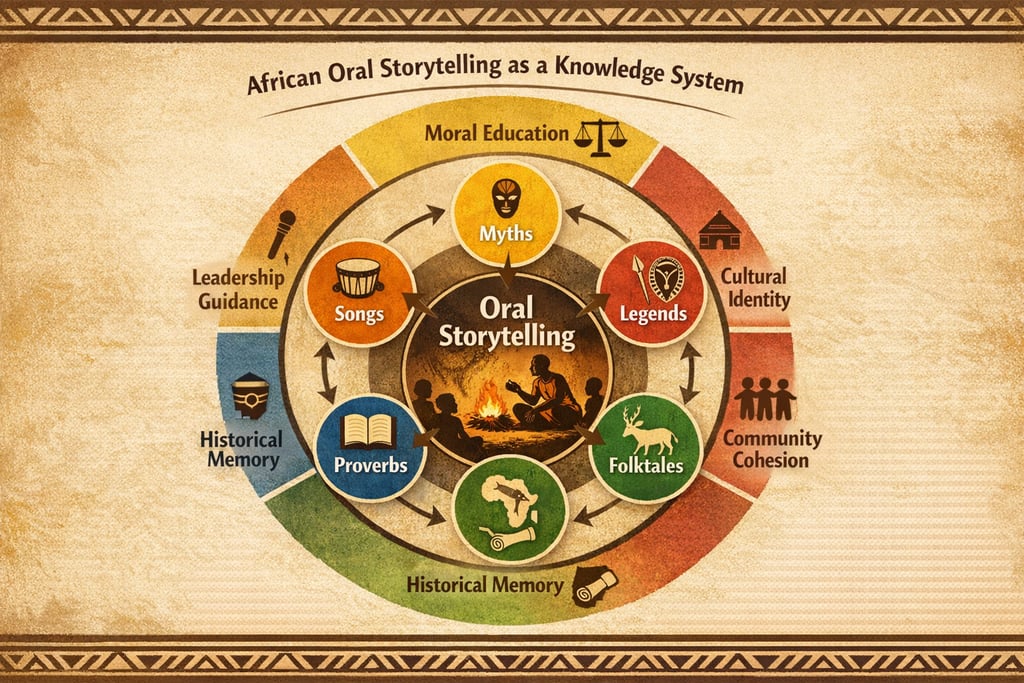
For thousands of years, African societies relied on oral communication rather than written documentation. Knowledge was preserved through storytellers, elders, and cultural custodians.
These storytellers are often called griots in West Africa. Griots function as historians, poets, musicians, and cultural educators who maintain collective memory.
African oral traditions include several major narrative types.
Myths explain the origins of the world, humans, animals, and natural forces.
Legends describe historical heroes or cultural founders.
Folktales present fictional stories with strong moral lessons.
Proverbs offer concise wisdom used in everyday conversation.
These forms work together to build a shared ethical framework within communities.
Unlike many modern stories created only for entertainment, African folklore is intentionally designed to teach social responsibility.
If you want to explore these storytelling traditions in greater depth, the collection at Tales of Africa documents folktales, proverbs, and oral narratives from different African cultures.
The site focuses on the meaning behind the stories rather than only retelling them. Each narrative is presented with cultural background so readers can understand the moral lessons, symbolism, and social values that shape African storytelling traditions.
Why Moral Lessons Are Central to African Storytelling
Moral lessons are central to African folklore because storytelling functions as a social education system. Stories teach acceptable behavior, warn against harmful actions, and guide younger generations on how to live within their community.
Many African societies historically lacked formal schools for large parts of their populations. Storytelling filled this educational role.
Children and adults gathered in the evenings to listen to stories that combined entertainment with instruction.
This approach made moral education memorable.
Instead of abstract rules, listeners encountered vivid characters who experienced consequences for their actions.
For example:
• greedy characters lose everything
• dishonest characters face humiliation
• patient characters gain wisdom
• cooperative characters build strong communities
This method works because stories trigger emotional engagement. People remember lessons more easily when they are embedded in narrative form.
Anthropologists studying oral cultures consistently note that storytelling helps communities transmit ethical standards without formal institutions.
What Are the Most Common Moral Lessons in African Folklore?
African folktales commonly teach lessons about honesty, humility, wisdom, cooperation, respect for elders, and the dangers of greed, arrogance, and selfishness.
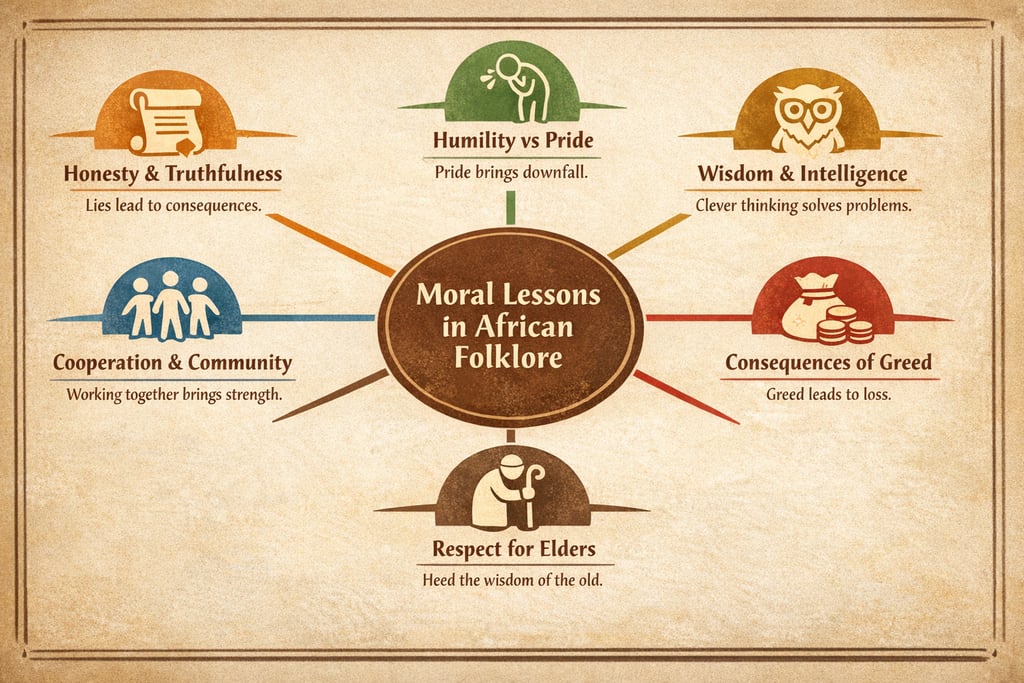
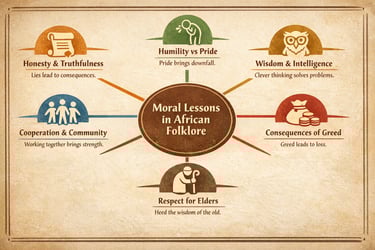
Although Africa contains over 3,000 ethnic groups and more than 2,000 languages, many storytelling themes appear across regions.
These recurring moral ideas reflect shared social priorities.
Honesty and Truthfulness
Dishonesty often leads to punishment in folktales.
Characters who lie, cheat, or deceive usually experience consequences that restore fairness.
The lesson is simple. Trust holds communities together. Without honesty, cooperation collapses.
Humility Over Pride
Pride is a frequent source of downfall in African narratives.
Characters who boast about strength or intelligence often encounter someone wiser who humbles them.
These stories remind listeners that knowledge and power must be balanced with humility.
The Value of Wisdom
Intelligence is celebrated in many African folktales, especially when used to solve problems peacefully.
Clever characters frequently overcome physically stronger opponents through strategic thinking.
Wisdom becomes a respected form of leadership.
Cooperation and Community
African cultures often emphasize collective responsibility rather than extreme individualism.
Stories highlight how cooperation allows communities to survive droughts, conflicts, and natural challenges.
Selfish characters are often isolated or defeated.
Respect for Elders
Elders represent accumulated wisdom and experience.
Characters who ignore elder advice frequently face difficulties.
The moral reinforces the idea that guidance from experienced community members protects younger generations from avoidable mistakes.
How Trickster Characters Teach Moral Lessons
Trickster characters such as Anansi the Spider teach moral lessons by using humor, deception, and unexpected consequences to reveal human weaknesses like greed, laziness, or arrogance.
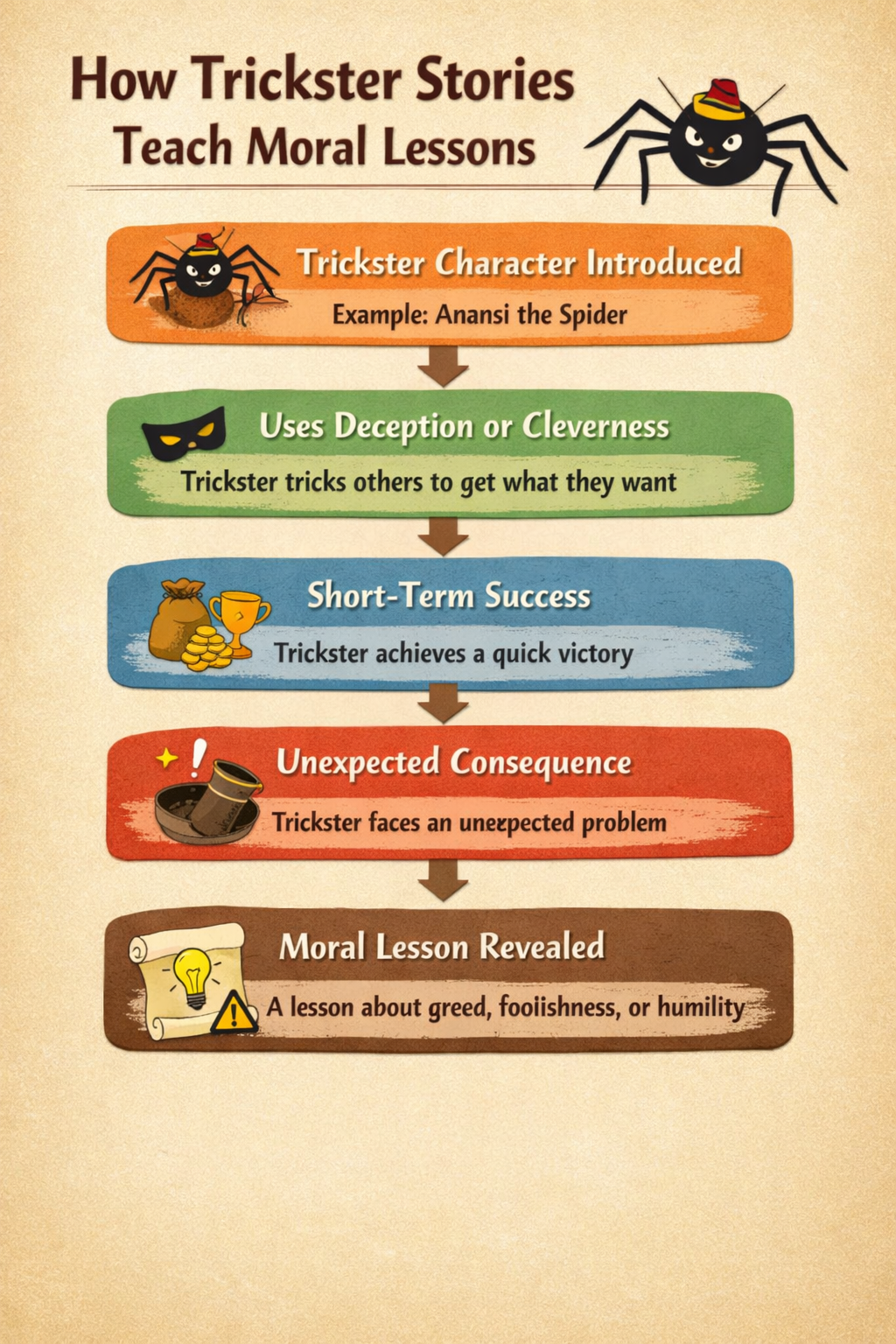
One of the most famous figures in African folklore is Anansi, a spider trickster from the Akan people of Ghana.
Anansi stories spread widely across the African diaspora, especially in the Caribbean.
You can explore examples of these narratives in Anansi folklore.
Tricksters are fascinating because they break rules.
Sometimes they succeed. Sometimes they fail.
This ambiguity allows storytellers to explore complex moral questions.
Common trickster lessons include:
• intelligence can defeat brute strength
• greed often backfires
• cleverness must be used responsibly
• shortcuts rarely produce lasting success
From a psychological perspective, trickster stories allow communities to safely examine dangerous behavior patterns without directly accusing individuals.
Listeners recognize themselves in the flawed characters.
What Practical Life Lessons Do These Stories Teach?
African folklore provides practical guidance for real life decisions involving leadership, conflict resolution, community cooperation, and personal discipline.
Many people assume folktales are only symbolic. In reality, they contain applied social knowledge.
Leadership Training
Stories often illustrate leadership mistakes.
Bad leaders ignore advice, abuse power, or act selfishly. Their communities suffer as a result.
Effective leaders listen, remain humble, and protect collective interests.
These narratives function as early leadership training for young listeners.
Conflict Resolution
Folktales frequently show conflicts resolved through negotiation or clever compromise.
Violence is rarely portrayed as the most effective solution.
This reinforces community stability.
Resource Management
In agricultural societies, stories often warn against waste and greed.
Characters who hoard resources create imbalance within the community.
Stories encourage responsible sharing.
Patience and Long Term Thinking
Quick rewards often lead to long term loss in folktales.
Characters who plan carefully and remain patient usually succeed.
This lesson mirrors real life economic survival strategies in unpredictable environments.
How African Proverbs Reinforce Moral Lessons
African proverbs condense moral lessons from folklore into short memorable statements used in daily conversation to guide behavior and decision making.
Proverbs are one of the most powerful teaching tools in African oral culture.
They transform complex wisdom into simple language.
A well known African proverb states:
“Wisdom is like a baobab tree; no one individual can embrace it.”
This communicates a profound idea. Knowledge belongs to the community, not a single person.
Another example says:
“If you want to go fast, go alone. If you want to go far, go together.”
This emphasizes long term cooperation.
Proverbs are often used by elders to advise younger people without direct criticism.
Instead of giving a lecture, a short proverb communicates the message with elegance.
Cultural Values Reflected in African Folktales
African folklore reflects core cultural values such as communal responsibility, respect for nature, intergenerational knowledge sharing, and balance between humans and the environment.
Stories do more than teach individual morality. They reinforce broader cultural principles.
Community First Thinking
Many African societies prioritize the well being of the group.
Stories often contrast selfish characters with cooperative ones.
The cooperative characters build stronger communities.
Harmony with Nature
Animals frequently appear as speaking characters in folktales.
This reflects a worldview where humans and nature are interconnected.
Stories teach respect for natural resources and ecological balance.
Intergenerational Knowledge
Elders play a crucial role in storytelling traditions.
Their role reflects the cultural belief that wisdom accumulates through lived experience.
Respecting elder knowledge strengthens social continuity.
Mistakes People Make When Interpreting African Folklore
Common mistakes include treating folktales as simple children’s stories, ignoring cultural context, and overlooking the complex social systems embedded within oral traditions.
Many readers misunderstand African folklore because they analyze it through a modern Western storytelling framework.
Mistake 1: Assuming Stories Are Only for Children
While children enjoy folktales, the lessons are often designed for adults.
Some stories address leadership failures, social justice, and community ethics.
Mistake 2: Ignoring Cultural Context
Symbols vary widely between cultures.
An animal that represents wisdom in one region might represent trickery in another.
Understanding context improves interpretation.
Mistake 3: Underestimating Oral Knowledge Systems
Oral traditions are sometimes seen as less reliable than written records.
In reality, oral storytelling systems often contain sophisticated memory structures that preserve history for centuries.
How Moral Lessons in African Folklore Apply Today
The ethical principles found in African storytelling remain relevant for modern leadership, education, business ethics, and community development.
These stories continue to influence modern African societies and global audiences.
Education
Teachers use folktales to help students understand ethics through narrative rather than abstract rules.
Leadership Development
Organizations sometimes use storytelling frameworks to teach leadership values such as humility, listening, and responsibility.
Cultural Identity
African diaspora communities maintain storytelling traditions as a way to preserve identity across generations.
Business Ethics
Many folktales warn against greed and short term thinking.
These lessons translate well into modern discussions about ethical leadership and sustainable decision making.
Frequently Asked Questions
What is the purpose of African folklore?
African folklore preserves cultural knowledge, moral values, historical memory, and social norms. It helps communities teach ethical behavior while strengthening collective identity and cultural continuity.
Why are animals common in African folktales?
Animals allow storytellers to explore human behavior symbolically. By using animal characters, stories can critique arrogance, greed, or foolishness without directly accusing real people.
Who traditionally tells African folktales?
Storytelling is often performed by elders, community leaders, and specialized storytellers such as griots. These individuals maintain cultural memory and pass knowledge across generations.
Are African folktales still relevant today?
Yes. Many modern educators, writers, and leadership programs use African folktales to teach ethics, resilience, and community responsibility in contemporary contexts.
What is the difference between folklore and oral tradition?
Folklore refers to the stories, myths, and cultural narratives themselves. Oral tradition describes the method of transmitting those stories through spoken storytelling rather than written texts.
African folklore and oral traditions remain one of humanity’s richest knowledge systems. Through memorable characters, symbolic animals, and vivid narratives, these stories teach timeless lessons about integrity, wisdom, humility, and the importance of community.
About The Author
Mubashir Shakoor Godha is a blogger, digital marketer, and SEO specialist based in Pakistan. He started his journey in 2019 on Blogger.com and has since built and managed multiple websites that rank on Google and AI driven search platforms.
He is also the Founder of MSG Digitals, Top Rated Digital Marketing Agency in Pakistan, where he helps businesses grow through SEO, content strategy, and performance marketing.

usefulservices24@gmail.com
© 2026 Tales of Africa. All rights reserved.