African Travel Packing Guide with Safari and Climate Tips
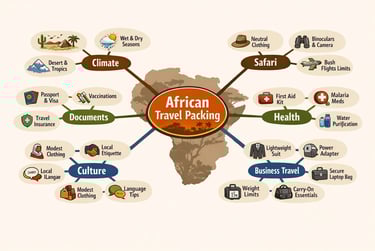
African travel packing depends on region, season, and trip style. Bring lightweight breathable clothing, a warm layer for cool mornings, strong sun protection, insect repellent, sturdy walking shoes, essential documents, and health supplies.
TOURISM
Godha
2/26/20268 min read
African Travel Packing Guide for Safari, Cities, and Every Climate
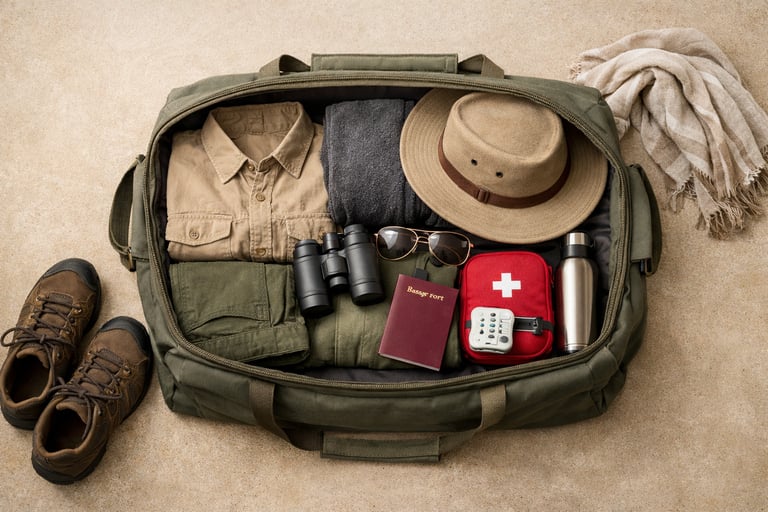
Pack neutral colors for safari, modest clothing where required, and keep luggage light for regional flights.
Africa is not one climate or one travel experience. It is deserts, coastlines, mountains, savannah, rainforests, and global cities.
If you pack based on assumptions, you will either overpack or forget something important. If you pack based on geography, season, and activity, your trip feels easier from day one.
I have packed for safari lodges with strict weight limits, coastal holidays with heavy humidity, and business trips in major African cities. The difference between a stressful trip and a smooth one often starts with your suitcase.
This guide breaks down African travel packing in depth so it works for beginners, repeat travelers, and professionals alike.
Why Is African Travel Packing More Complex Than Other Trips
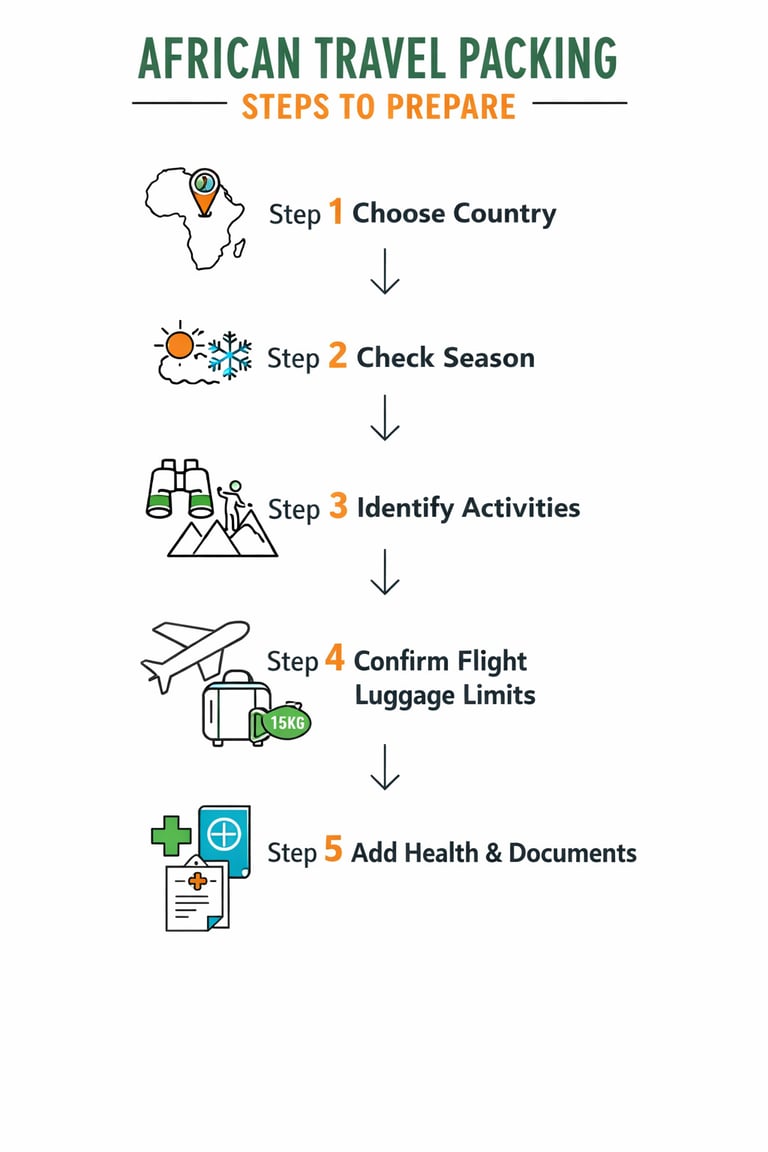
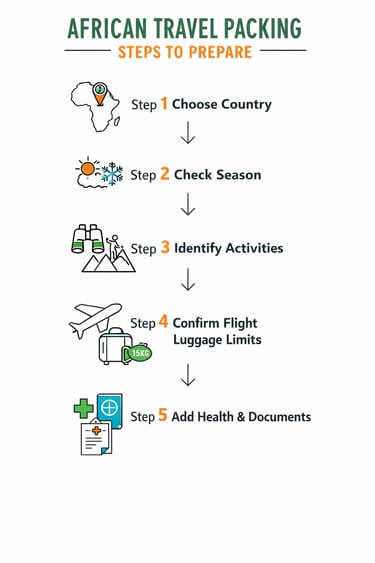
Africa includes multiple climate zones, infrastructure levels, and cultural expectations. Packing must match the exact country, travel season, terrain, and activity type. A safari in Tanzania requires different gear than a conference in Nairobi or a desert tour in Morocco.
Many travelers search for a single Africa packing list. That approach rarely works.
Key variables that shape your packing list:
Climate zone
Dry or rainy season
Urban versus remote travel
Wildlife activities or adventure trekking
Cultural norms
For example, Southern Africa in July can have near freezing mornings on safari. West Africa in May may feel intensely humid. North Africa in winter can require warm layers at night.
Good packing starts with research on your specific destination, not the continent as a whole.
What Should Be on Every African Travel Packing List
Every African travel packing list should include breathable clothing, layered outerwear, sun protection, insect protection, comfortable footwear, travel documents, health essentials, and secure luggage. These form the foundation regardless of country.
Core Clothing for Africa Travel
Choose lightweight fabrics that dry quickly and allow airflow. Cotton blends, technical fabrics, and linen work well.
Pack:
3 to 5 breathable tops
2 to 3 trousers or travel pants
1 pair of shorts or skirt where appropriate
1 fleece or insulated mid layer
1 light waterproof jacket
Sleepwear
Undergarments
Swimsuit if needed
For safari packing, neutral colors such as khaki, olive, beige, and brown are ideal. These reduce visual impact in wildlife areas and are practical in dusty environments.
Avoid military style camouflage in countries where it may be restricted.
Footwear That Works Across Africa
Bring:
Sturdy walking shoes or trail shoes
Sandals for relaxed settings
Optional formal shoes for business or upscale dining
Shoes should be broken in before travel. Remote areas may not offer easy replacements.
How Do You Pack for an African Safari
African safari packing requires neutral clothing, early morning layers, dust protection, compact gear, and strict weight management for bush flights. Focus on comfort, mobility, and practicality.
Safari days often start before sunrise. Morning drives can be cold. Midday heat can rise quickly.
Layering Strategy for Safari
Use a three layer approach:
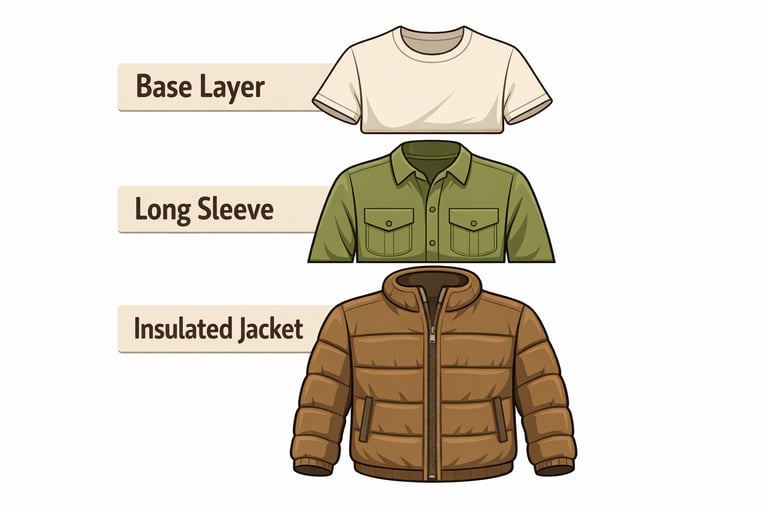
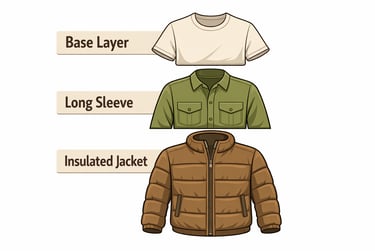
Breathable base layer
Long sleeve shirt for sun and insects
Fleece or insulated jacket for mornings
Add a light scarf for dust protection during dry season drives.
Convertible trousers allow flexibility when temperatures rise.
Safari Gear That Improves Experience
Consider packing:
Compact binoculars
Camera with zoom lens
Extra batteries and memory cards
Soft sided duffel bag
Reusable water bottle
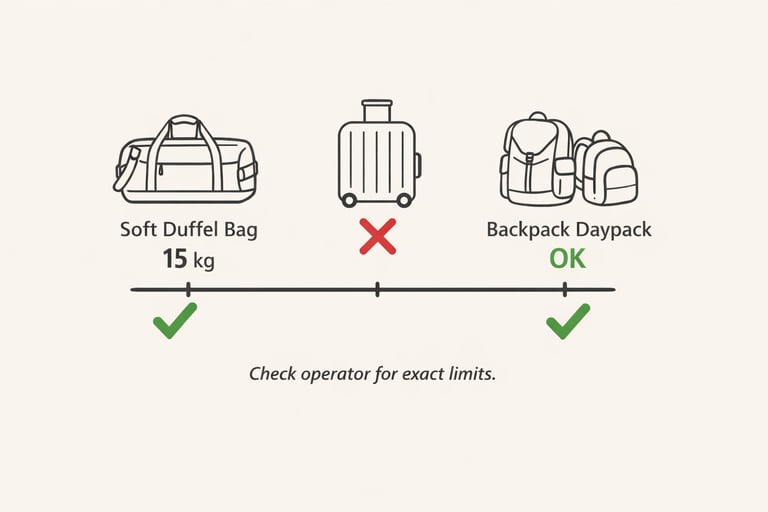
Many regional safari flights limit luggage to around 15 kilograms in soft bags. Confirm weight limits with your operator before departure. The International Air Transport Association provides general airline baggage standards, but safari carriers may apply stricter rules.
Hard shell suitcases are often not allowed on small aircraft.
How Does Climate Change Your Africa Packing List
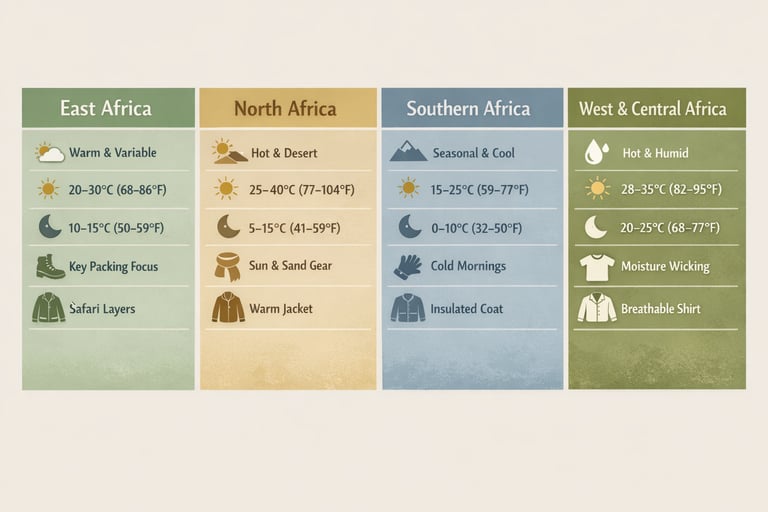
Africa includes desert, tropical, temperate, and high altitude climates. Packing must match your specific country and travel month. Many regions experience large temperature swings between day and night. Seasonal differences are documented in official climate data.
East Africa Packing
Kenya, Tanzania, and Uganda often have warm days and cool mornings.
Bring:
Light layers
Rain jacket during wet seasons
Neutral safari clothing
Modest attire for towns
High altitude areas such as Mount Kenya or Ethiopian highlands require warmer gear. Park regulations and conservation guidelines are published by the Kenya Wildlife Service.
North Africa Packing
Morocco, Egypt, and Tunisia can have extreme summer heat and cold desert nights.
Add:
Breathable long sleeves for sun
Wide brim hat
Warm layer for evenings
Scarf for dust and modesty
Desert air dries quickly. Lip balm and hydration salts are helpful.
Southern Africa Packing
South Africa, Namibia, Botswana, and Zambia have defined seasons.
Winter safari mornings can be very cold.
Pack:
Gloves
Warm hat
Insulated jacket
Coastal cities like Cape Town may be windy. A windproof outer layer is more useful than heavy sweaters.
West and Central Africa Packing
Countries such as Ghana or Cameroon often experience high humidity.
Choose:
Moisture wicking fabrics
Extra lightweight clothing
Sandals that dry quickly
Humidity increases sweat retention. Quick drying fabrics prevent discomfort.
What Travel Documents and Health Items Do You Need for Africa
You need a passport with sufficient validity, visa where required, travel insurance, vaccination documentation if applicable, and essential medications. Requirements vary by country and transit route.
Always review official travel health recommendations before departure.
When you’re packing health items for Africa, don’t rely on guesswork or old forum tips. Entry rules and vaccine guidance can change based on where you’re going and where you’ve recently traveled. I use the World Health Organization travel health pages as a starting point, then confirm any country specific requirements through official government sources and my clinician.
Travel Documents
Carry:
Passport valid for at least six months
Visa if required
Printed and digital document copies
Travel insurance certificate
Proof of onward travel when required
Before you finalize your packing list, review the VISA requirements for African countries carefully. Entry rules differ widely across the continent. Some countries offer visa on arrival, others require advance applications, and a few request proof of accommodation, onward travel, or vaccination records. Confirming these details early helps you prepare the right documents and avoid last minute stress at the airport.
Some countries require yellow fever vaccination proof depending on travel history. The World Health Organization publishes updated guidance on yellow fever risk areas. Always verify official government sources before departure.
Health Essentials for African Travel
Pack:
Personal medications
Basic first aid kit
Rehydration salts
Anti diarrheal medication
Hand sanitizer
Insect repellent
In malaria risk zones, follow medical advice regarding prevention and protective clothing.
Remote safari camps may not have immediate pharmacy access. A small personal medical kit saves time and stress.
How Can You Pack Light for Africa Without Sacrificing Comfort
Pack versatile clothing, limit duplicates, use packing cubes, and choose multi purpose items. Focus on adaptability rather than volume.
Use Versatile Outfits
Select pieces that mix and match easily.
For example:
Neutral trousers that work on safari and in city settings
Shirts that function for both day tours and casual dinners
Jacket that handles wind and light rain
Limit Shoes
Shoes add weight quickly.
Most trips need:
One solid walking shoe
One lighter option
Plan for Laundry Access
Hotels and safari lodges often offer laundry services. This reduces the need for excessive clothing.
What Should Women Pack for Africa Travel
Women should pack breathable, modest, and versatile clothing suitable for climate and cultural norms. Comfort and coverage are often more practical than fashion focused choices.
Consider:
Loose trousers or maxi skirts
Lightweight long sleeve tops
Scarf for flexibility
Sports bra for active days
Crossbody bag for security
In conservative regions, covering shoulders and knees is respectful outside resort areas.
What Should Men Pack for Africa Travel
Men should pack lightweight trousers, breathable shirts, layered outerwear, and sturdy shoes. Neutral colors work well in wildlife areas.
Add:
Collared shirt for formal settings
Lightweight belt
Compact daypack
Avoid overly revealing clothing in conservative regions.
What Should Professionals Pack for Business Travel in Africa
Business travelers should pack climate appropriate formal attire, reliable electronics, and secure document storage. Major African cities have modern business standards similar to global hubs.
Pack:
Lightweight suit or formal wear
Breathable dress shirts
Comfortable formal shoes
Universal power adapter
Portable charger
Laptop security cable
Electric socket types vary by country. A universal adapter prevents compatibility issues.
What Technology and Safety Gear Improve Your Trip
Practical tech and security tools improve convenience and safety. Focus on power management, offline navigation, and secure storage.
Bring:
Power bank
Universal adapter
Small flashlight or headlamp
Luggage locks
Offline maps downloaded before travel
In remote areas, electricity may operate on generator schedules.
Keep valuables in carry-on luggage during flights.
What Are the Most Common African Travel Packing Mistakes
Common mistakes include overpacking, ignoring seasonality, bringing hard suitcases on bush flights, forgetting modest clothing, and underestimating temperature drops.
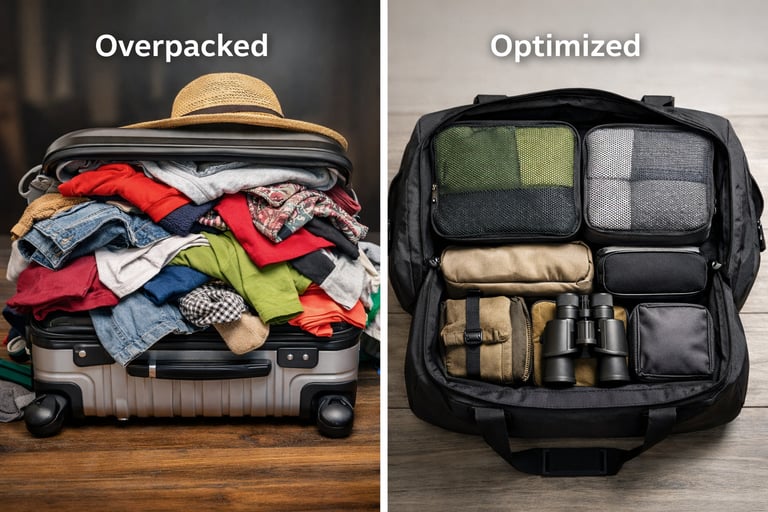
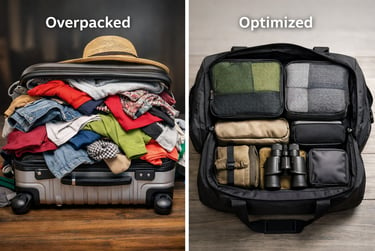
From experience, the biggest mistake is packing for daytime heat only.
Even in warm regions, early mornings can feel surprisingly cold. A lightweight insulated layer takes little space and solves this problem.
Another frequent issue is bringing heavy cotton clothing in humid regions. It dries slowly and becomes uncomfortable.
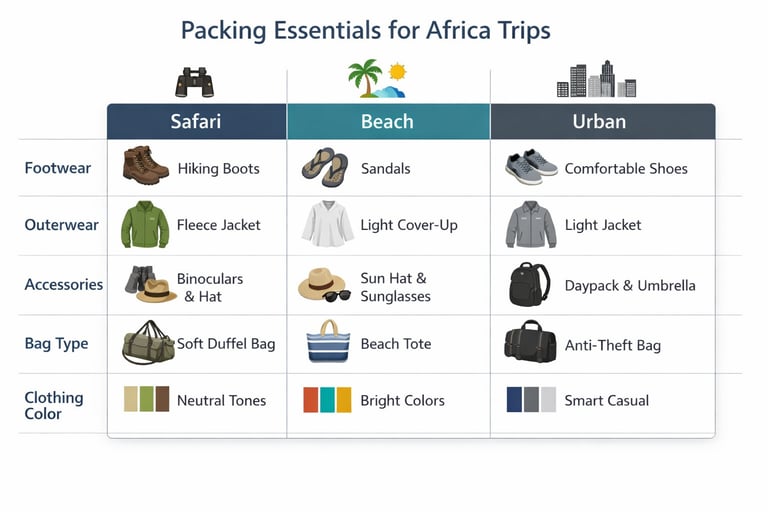
Sample Africa Packing Lists by Travel Type
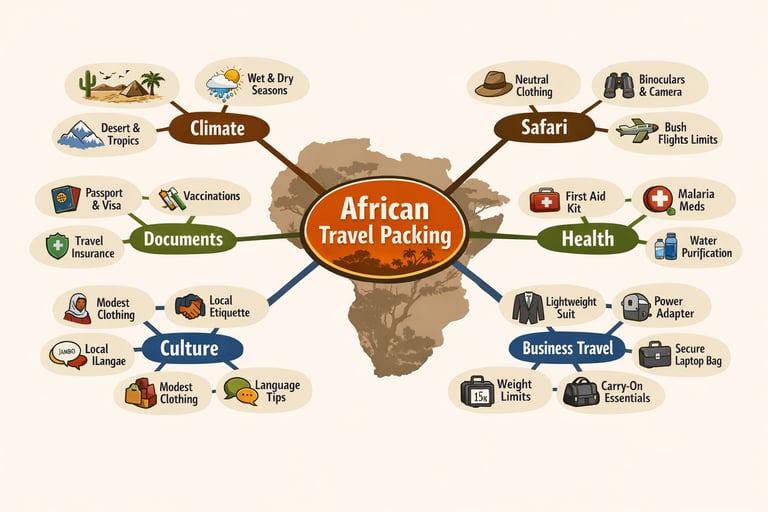
Safari Packing List
Neutral shirts and trousers
Fleece or insulated jacket
Wide brim hat
Sunglasses
Insect repellent
Binoculars
Soft duffel bag
Beach Vacation Packing
Swimsuits
Light cover ups
Sandals
Reef safe sunscreen
Light evening layer
Adventure and Trekking Packing
Trail shoes
Technical shirts
Hydration system
Rain jacket
Compact first aid kit
Urban Exploration Packing
Smart casual clothing
Comfortable sneakers
Crossbody bag
Portable charger
Frequently Asked Questions About African Travel Packing
What colors are best for African safari packing
Neutral earth tones such as khaki, beige, olive, and brown work best. They are practical for wildlife viewing and reduce visibility in natural environments.
Do you need heavy winter clothing for Africa
Only in specific regions and seasons. Southern Africa winter mornings and high altitude areas require warm layers.
Is luggage weight restricted on safari flights
Yes, many bush flights restrict luggage to around 15 kilograms in soft bags. Always confirm with your safari provider.
Can you buy travel essentials locally
Major cities have well stocked stores. Remote areas may not. Pack critical medical and specialty items in advance.
Do you need vaccinations for African travel
Requirements vary by country and travel history. Check official health authorities for up to date guidance before departure.
Is it safe to bring electronics
Yes, if you use protective cases and follow standard travel safety practices. Keep valuables secure and insured.
Final Thoughts
African travel packing is about alignment, not excess.
Match your clothing to climate. Match your gear to activity. Respect cultural norms. Confirm airline weight limits. Prepare for both sun and cool mornings.
When you pack with clarity and restraint, your travel feels lighter. You move easily between safari drives, coastal towns, mountain trails, and business meetings.
That flexibility is what makes travel across Africa rewarding and manageable.
Mubashir Shakoor Godha
Mubashir Shakoor Godha is a blogger, digital marketer, and SEO specialist based in Pakistan. He started his journey in 2019 on Blogger.com and has since built and managed multiple websites that rank on Google and AI driven search platforms.
He is also the Founder of MSGDigitals, Top Rated Digital Marketing Agency in Pakistan, where he helps businesses grow through SEO, content strategy, and performance marketing.

usefulservices24@gmail.com
© 2026 Tales of Africa. All rights reserved.