
Travel Guide to Africa for First Time and Experienced Travelers
A travel guide to Africa helps travelers plan trips by covering destinations, transportation, safety, visas, wildlife experiences, and travel costs. With deserts, rainforests, cities, and safari parks across the continent, careful preparation helps ensure a safe and rewarding travel experience.
TOURISM
Godha
2/20/20268 min read
Travel Guide to Africa
Africa is the world’s second largest continent and one of the most diverse travel regions on earth. With 54 countries, hundreds of languages, and dramatically different ecosystems, traveling in Africa requires more planning than typical international trips.
This guide explains how to plan travel across Africa, which destinations suit different types of travelers, and the practical strategies experienced travelers use to make their journeys smoother and safer.
What Is a Travel Guide to Africa and Why Do You Need One?
A travel guide to Africa is a structured resource that helps travelers understand where to go, when to visit, how to travel safely, and how to prepare for the continent’s unique geography and cultures. Because Africa contains dozens of travel environments, planning is critical.
Unlike smaller travel regions, Africa cannot be treated as a single destination. Traveling in Morocco is very different from visiting Kenya, Namibia, or South Africa.
A good guide helps you navigate several key factors:
climate zones
visa rules
regional safety conditions
wildlife tourism regulations
transportation limitations
For example, safari travel in East Africa often requires booking national park permits months in advance. Meanwhile, travel in North Africa resembles Mediterranean tourism with large cities and established transport networks.
Professional travel planners treat Africa as several travel regions rather than a single destination. These regions include North Africa, East Africa, Southern Africa, West Africa, and Central Africa.
Each region offers a different travel experience.
What Makes Africa One of the Most Unique Travel Destinations?
Africa is unique because it contains some of the planet’s most diverse ecosystems, cultural histories, and wildlife environments. From Sahara desert landscapes to tropical forests and modern cities, the continent provides travel experiences not found elsewhere.
Few places combine natural diversity and cultural heritage like Africa.
Major geographic environments include:
The Sahara Desert, the largest hot desert in the world
The Serengeti ecosystem, famous for wildlife migration
The Congo Rainforest, the second largest tropical forest on Earth
The Great Rift Valley, a massive geological formation stretching thousands of kilometers
These landscapes support rare wildlife species such as lions, elephants, gorillas, and cheetahs.
Africa is also home to some of humanity’s oldest civilizations. Egypt’s pyramids, Ethiopia’s ancient churches, and the trading cities of Morocco illustrate thousands of years of cultural development.
Travelers often underestimate how culturally varied Africa is. Over 2,000 languages are spoken across the continent.
This diversity means every trip to Africa feels like visiting several different worlds.
Which Regions of Africa Are Best for Travelers?
The best regions of Africa depend on your travel goals. North Africa is ideal for culture and historic cities, East Africa for wildlife safaris, Southern Africa for scenic landscapes and infrastructure, and West Africa for cultural immersion.
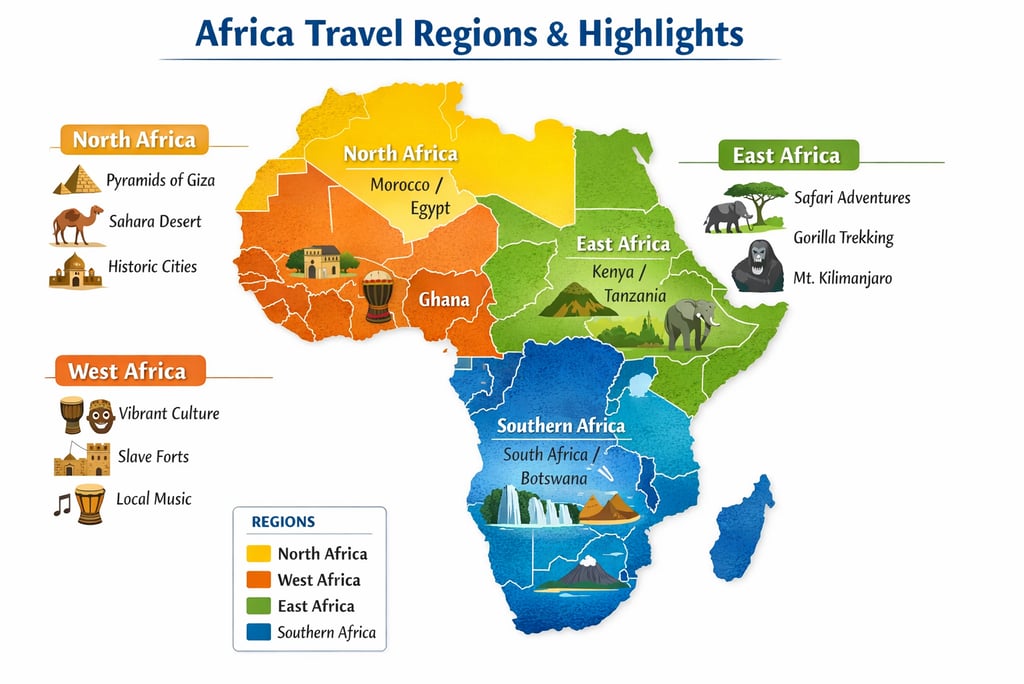
North Africa
Countries include:
Morocco
Egypt
Tunisia
Travel here resembles Mediterranean tourism. Cities such as Marrakech, Cairo, and Fez offer historic architecture, markets, and desert excursions.
Popular experiences include:
visiting the Pyramids of Giza
Sahara camel treks
exploring ancient medinas
For background on these destinations, travelers often review resources from UNESCO World Heritage which documents many preserved historic sites.
East Africa
Countries include:
Kenya
Tanzania
Uganda
Rwanda
East Africa is the heart of safari tourism.
Top experiences include:
Serengeti wildlife migration
gorilla trekking in Rwanda and Uganda
climbing Mount Kilimanjaro
Safari travel usually requires organized tours because national parks operate with strict conservation rules.
Southern Africa
Countries include:
South Africa
Namibia
Botswana
Zimbabwe
This region has some of the most developed travel infrastructure in Africa.
Highlights include:
Kruger National Park
Victoria Falls
Namibia’s red sand dunes
Cape Town’s coastal landscapes
Southern Africa is often recommended for first time safari travelers.
West Africa
Countries include:
Ghana
Senegal
Nigeria
Tourism here focuses more on culture, music, history, and local life rather than wildlife safaris.
Visitors explore historic trading ports, Atlantic coastlines, and powerful historical sites linked to the transatlantic slave trade.
Africa is vast, and choosing where to start can feel overwhelming. Many travelers first narrow their options by focusing on a few standout destinations rather than the entire continent.
Countries such as Morocco, Kenya, South Africa, Tanzania, and Namibia often appear on shortlists because they combine strong tourism infrastructure with diverse experiences.
If you want a deeper breakdown of these options, you can explore our guide on the best countries to visit in Africa, which explains how different destinations match specific travel goals such as wildlife safaris, cultural travel, coastal trips, or desert exploration.
When Is the Best Time to Travel to Africa?
The best time to travel to Africa depends on the region and your activities. Dry seasons are usually best for wildlife viewing, while cooler months are better for desert travel.
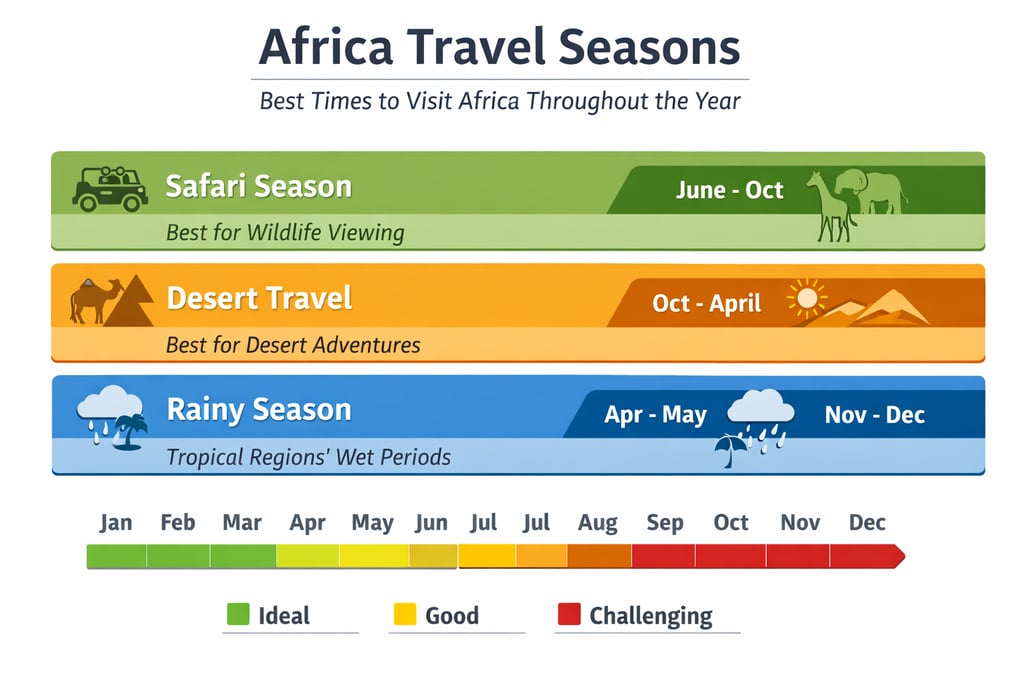
Africa spans several climate zones. Weather patterns vary widely.
Safari Timing
The dry season is ideal for wildlife viewing because animals gather near water sources.
Typical safari seasons include:
June to October in East Africa
May to September in Southern Africa
During these months vegetation is thinner, making animals easier to spot.
Desert Travel Timing
Desert regions such as Morocco and Namibia become extremely hot in summer.
Best months include:
October to April
Temperatures remain manageable for exploration and desert tours.
Coastal Travel Timing
Many African coastal areas follow tropical weather cycles.
Some countries experience rainy seasons that can affect travel logistics.
Reliable climate information is available through the World Meteorological Organization which tracks regional climate patterns.
How Do You Plan a Trip Across Africa?
Planning travel across Africa requires organizing visas, vaccinations, flights, internal transportation, and accommodation before arrival. Unlike many travel destinations, infrastructure varies widely between countries.
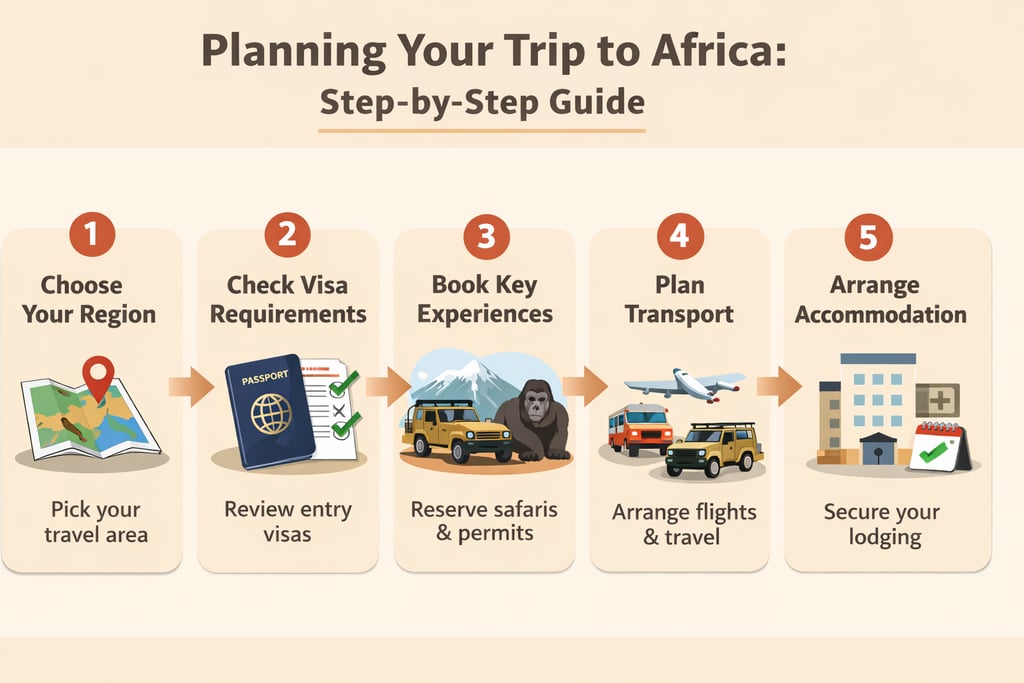
Experienced travelers approach Africa trip planning in stages.
Step 1. Choose a Travel Region
Instead of attempting to visit multiple distant countries, focus on one region.
For example:
East Africa safari route
Morocco and North Africa culture route
Southern Africa scenic road trip
This reduces travel complexity.
Step 2. Research Visa Requirements
Many African countries require visas in advance.
Some provide visas on arrival, while others require online e-visa applications.
Visa policies change frequently, so checking official embassy websites is essential.
Step 3. Book Key Experiences Early
Certain activities require advance reservations:
gorilla trekking permits
national park safaris
Kilimanjaro climbing permits
Permits can sell out months ahead.
Step 4. Plan Internal Transport
Transportation options include:
domestic flights
safari vehicles
buses and shared vans
private drivers
Large distances make flights the most efficient option in many regions.
What Wildlife Experiences Can You Expect in Africa?
Africa offers the world’s most famous wildlife experiences, including safari drives, gorilla trekking, birdwatching, and marine wildlife tours. Many national parks protect ecosystems where large animals live in natural habitats.
Wildlife tourism drives much of Africa’s travel industry.
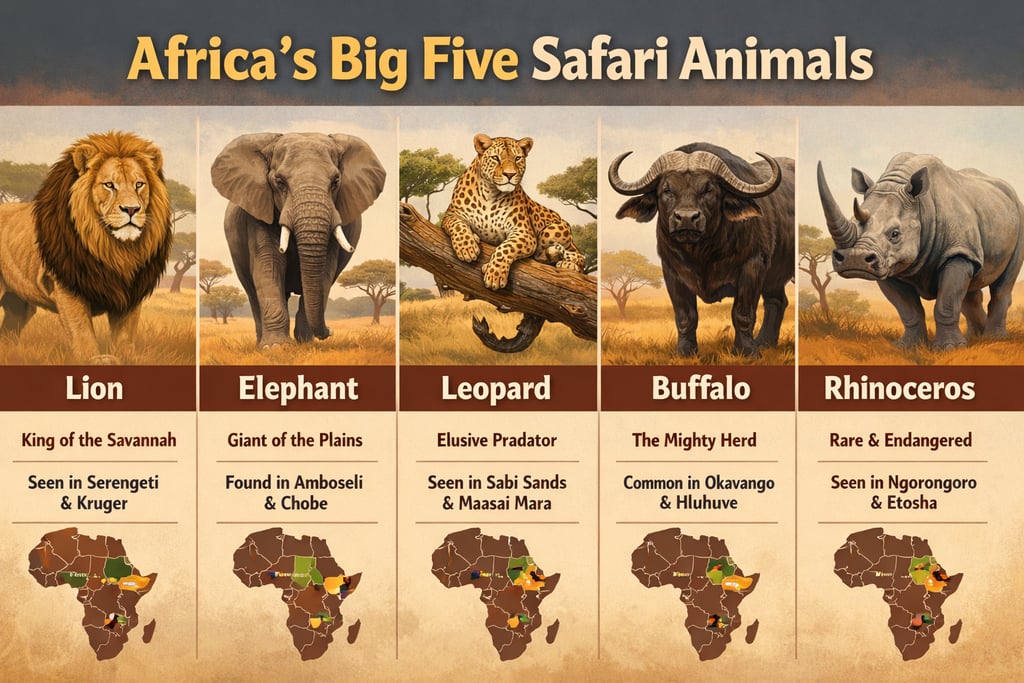
The Big Five Safari Animals
Safari tourism traditionally focuses on five iconic animals:
lion
elephant
leopard
buffalo
rhinoceros
These species became famous through early wildlife expeditions and remain the highlight of safari tours.
The Great Migration
One of the most dramatic wildlife events on Earth is the Serengeti migration, where over a million wildebeest travel across Tanzania and Kenya each year.
Travelers often plan trips specifically to witness river crossings during migration season.
Gorilla Trekking
Gorilla trekking in Rwanda and Uganda is one of the rare wildlife experiences where visitors observe animals in dense rainforest environments.
Strict conservation rules limit daily visitor numbers to protect the species.
What Cultural Experiences Should Travelers Explore?
Africa offers rich cultural experiences including traditional music, historic architecture, local markets, religious sites, and community tourism initiatives.
Many travelers focus only on wildlife and miss Africa’s cultural depth.
Historic Civilizations
Africa contains some of the world’s oldest civilizations.
Examples include:
Ancient Egypt
Ethiopian Christian kingdoms
Swahili trading cities
These cultures shaped trade routes across the Indian Ocean and Mediterranean.
Local Markets
Markets provide insight into daily life.
Popular examples include:
Marrakech souks in Morocco
Maasai craft markets in Kenya
Dakar street markets in Senegal
These markets also support local artisans and traditional crafts.
Music and Festivals
Africa’s music traditions influence global genres such as jazz, blues, and modern pop.
Festivals across Ghana, Nigeria, and South Africa celebrate music, dance, and storytelling.
What Safety Considerations Should Travelers Know?
Travel safety in Africa depends heavily on the specific country and region. While many destinations are safe for tourists, travelers should research local conditions, follow official guidance, and use reputable tour operators.
Africa’s size means safety conditions vary widely.
General precautions include:
checking government travel advisories
using licensed tour operators
avoiding remote travel at night
keeping copies of travel documents
Urban areas may have pickpocket risks similar to major global cities.
National parks and safari regions are generally well managed with trained guides.
What Are the Common Mistakes First Time Travelers Make?
First time visitors often underestimate travel distances, assume infrastructure is similar across all countries, and overpack itineraries. These mistakes can lead to travel delays and missed experiences.
Mistake 1. Trying to Visit Too Many Countries
Africa’s scale surprises many travelers.
Flights between regions can take several hours, sometimes requiring connections through major hubs.
Focusing on one region leads to a richer experience.
Mistake 2. Ignoring Seasonal Weather
Rainy seasons can affect roads, safari visibility, and outdoor activities.
Planning around seasonal conditions improves your chances of seeing wildlife and enjoying outdoor exploration.
Mistake 3. Booking Safaris Too Late
Peak season safaris sell out quickly.
High quality lodges and guides often reach full capacity months in advance.
Mistake 4. Not Budgeting for Park Fees
Many national parks charge daily conservation fees.
These fees support wildlife protection and park management.
Travel budgets should include them.
How Much Does Travel in Africa Cost?
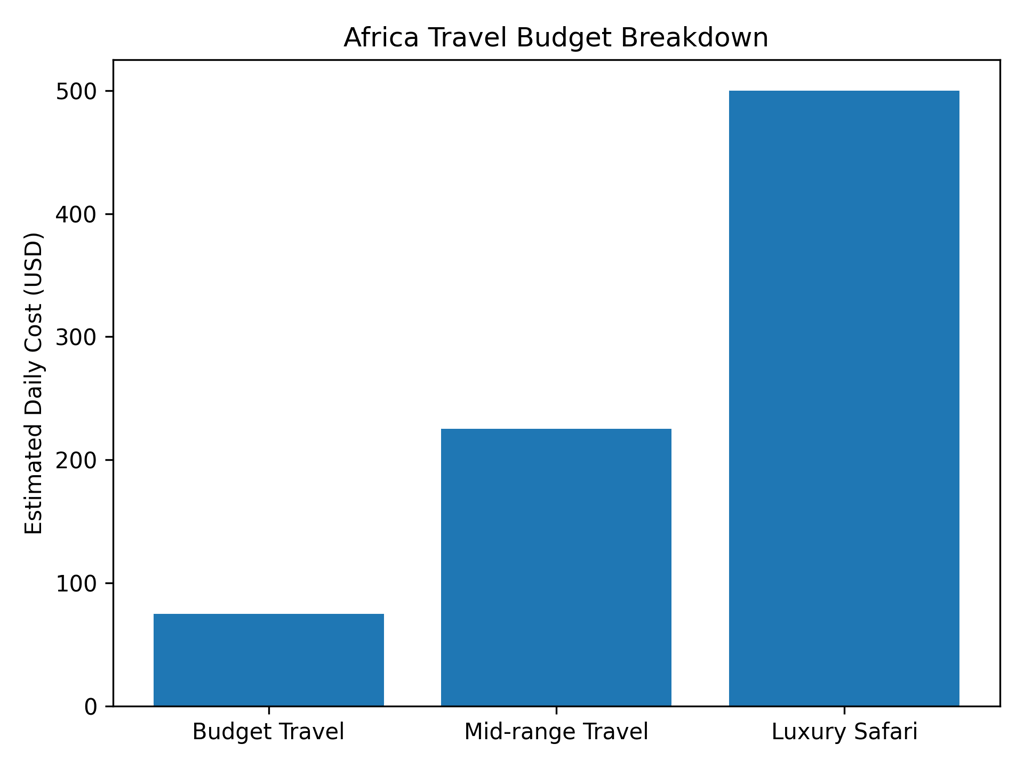
Travel costs in Africa vary widely depending on your destination and travel style. Budget trips may cost $50–$100 per day, while luxury safari travel can exceed $500 per day.
Budget Travel
Budget travelers often use:
hostels
local buses
shared tours
Some destinations such as Morocco and South Africa offer affordable options.
Mid Range Travel
Mid range travelers often spend between $150 and $300 per day.
Costs include:
small hotels or guesthouses
organized day tours
domestic flights
Luxury Safari Travel
Luxury safari lodges include guided game drives, meals, and park access.
These packages often cost several hundred dollars per night but provide expert guides and comfortable accommodations.
How Do Professional Travelers Plan Africa Trips?
Professional travel planners focus on logistics, seasonal timing, and conservation responsible tourism. They prioritize fewer destinations, longer stays, and expert guides to maximize the quality of each experience.
Experienced travelers treat Africa travel differently from typical tourism.
They focus on depth rather than quantity.
For example:
spending four days in a national park rather than visiting several parks briefly
using guides who understand wildlife behavior
supporting eco lodges and conservation tourism
This approach improves both wildlife sightings and cultural immersion.
Frequently Asked Questions
Is Africa safe for tourists?
Many African destinations are safe for travelers, especially popular tourism regions such as Morocco, Kenya, Tanzania, Botswana, and South Africa. Safety varies by country, so travelers should review government advisories and use licensed tour providers.
Do you need vaccines before traveling to Africa?
Some countries require vaccinations such as yellow fever before entry. Health recommendations vary depending on the region you visit, so travelers should consult travel health clinics before departure.
How many countries are in Africa?
Africa contains 54 internationally recognized countries. These nations span diverse political systems, cultures, and environments.
What language do people speak in Africa?
Africa has more than 2,000 languages. Major international languages such as English, French, Arabic, and Portuguese are widely used alongside local languages.
What is the best country in Africa for first time visitors?
South Africa, Morocco, and Kenya are often recommended for first time travelers because they offer well developed tourism infrastructure, accessible flights, and diverse attractions.
How long should you travel in Africa?
Trips of 10 to 14 days allow travelers to explore a single region comfortably. Longer trips of three to four weeks provide time to visit multiple destinations without rushing.
Africa offers some of the most powerful travel experiences in the world. Its landscapes, wildlife, cultures, and history reward travelers who prepare carefully and approach the journey with curiosity and respect. With thoughtful planning, a trip to Africa can become one of the most memorable travel experiences of your life.
About The Author
Mubashir Shakoor Godha is a blogger, digital marketer, and SEO specialist based in Pakistan. He started his journey in 2019 on Blogger.com and has since built and managed multiple websites that rank on Google and AI driven search platforms.
He is also the Founder of MSG Digitals, Top Rated Digital Marketing Agency in Pakistan, where he helps businesses grow through SEO, content strategy, and performance marketing.

usefulservices24@gmail.com
© 2026 Tales of Africa. All rights reserved.