
Oldest Football Clubs in Africa History and Legacy
The oldest football clubs in Africa emerged in the late 19th and early 20th centuries, mainly in North Africa and Egypt. Clubs such as Al Ahly SC (1907), Zamalek SC (1911), and Club Africain (1920) helped shape African football culture.
SPORTS
Godha
3/12/20268 min read
What Are the Oldest Football Clubs in Africa?
Football arrived in Africa during the colonial era through European sailors, traders, and administrators. What began as recreational matches between expatriates quickly evolved into organized clubs that local communities embraced.
Today, some of Africa’s oldest football clubs are not only historic institutions but also global brands. Their stories reflect the development of African sport, nationalism, and community identity.
Understanding these clubs offers insight into how football grew from a colonial pastime into the continent’s most popular sport.
Why Are the Oldest Football Clubs in Africa Important?
The oldest football clubs in Africa are important because they laid the foundation for organized football across the continent. They helped establish leagues, develop players, and build the passionate fan cultures that define African football today.
When football first arrived in Africa in the late 1800s, it lacked formal organization. Early clubs became the institutions that introduced rules, competitions, and training systems.
Many of these clubs were founded during colonial rule, yet they gradually became symbols of national identity. In Egypt, Tunisia, Algeria, and Morocco, football clubs often doubled as political and cultural institutions.
For example, Al Ahly SC became closely tied to Egyptian nationalism during the early 20th century. Similarly, Club Africain in Tunisia emerged as a symbol of resistance during the French protectorate period.
These clubs also built the foundations of major competitions. The creation of the Confederation of African Football (CAF) in 1957 allowed historic clubs to compete across borders, accelerating the professional growth of the sport.
Today, African football giants like Al Ahly, Zamalek, and Raja Casablanca trace their prestige directly to this early period of club formation.
Which Are the Oldest Football Clubs in Africa?
Several African football clubs founded in the early 1900s are considered among the oldest still active today. These clubs include Al Ahly SC, Zamalek SC, Club Africain, Espérance de Tunis, and Al-Ittihad Alexandria.
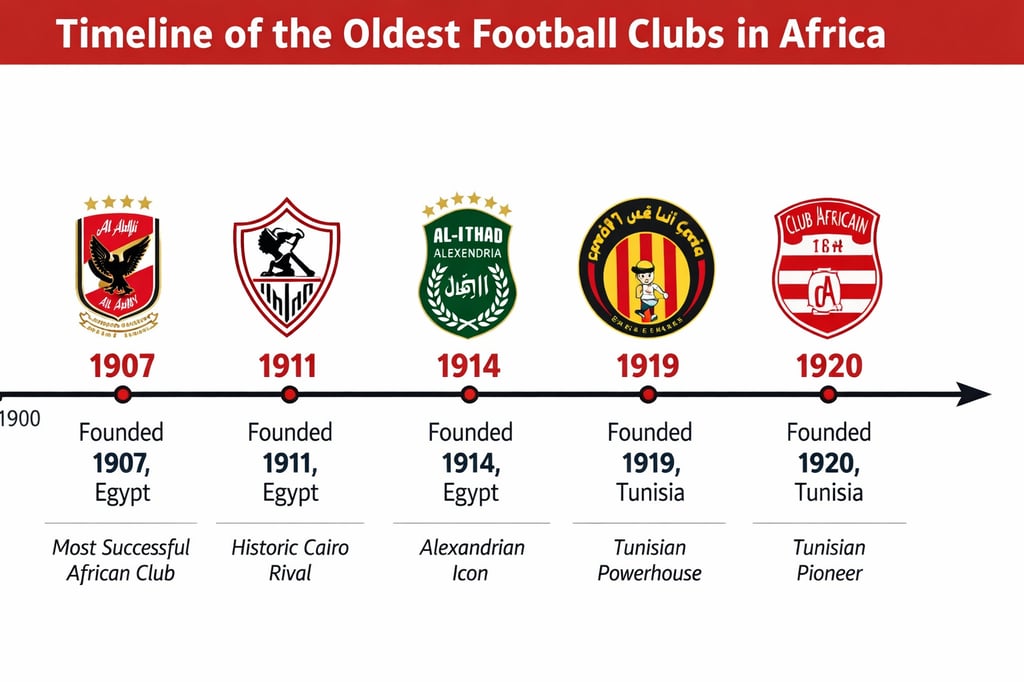
The following clubs are widely recognized for their historic founding dates and continuous football activity.
Al Ahly Sporting Club (1907) – Egypt
Founded in Cairo in 1907, Al Ahly SC is often considered the most influential football club in Africa.
Originally established as a club for Egyptian students resisting British colonial influence, Al Ahly quickly became a national institution. Over time it evolved into the most successful club in African football history.
Today the club holds numerous CAF Champions League titles and dominates Egyptian football.
Key facts about Al Ahly:
Founded: 1907
Country: Egypt
Stadium: Cairo International Stadium
Major titles: Record CAF Champions League victories
Its intense rivalry with Zamalek SC forms the famous Cairo Derby, one of the most passionate matches in world football.
Zamalek Sporting Club (1911) – Egypt
Founded in 1911, Zamalek SC is another pillar of early African football.
Originally called Qasr El-Nil Club, it was established by Belgian lawyer George Merzbach. The club later became a hub for Egyptian elites and expatriates before transforming into a powerhouse of local talent.
Today Zamalek remains one of the most decorated clubs in Africa.
Key achievements include:
Multiple CAF Champions League titles
Numerous Egyptian Premier League championships
Strong youth academy tradition
The rivalry between Zamalek and Al Ahly represents more than football. It reflects cultural, social, and political dynamics within Egypt.
Al-Ittihad Alexandria Club (1914) – Egypt
Founded in Alexandria in 1914, Al-Ittihad Alexandria Club is one of Egypt’s oldest football institutions.
Unlike Cairo’s clubs, Al-Ittihad developed from the merger of several smaller teams formed by local communities and expatriates. The club became a symbol of Alexandria’s sporting identity.
While it has fewer continental titles than Cairo giants, Al-Ittihad remains one of the most respected historic clubs in Egyptian football.
Club Africain (1920) – Tunisia
Founded in Tunis in 1920, Club Africain is among North Africa’s most historically significant football clubs.
During the French protectorate, the club represented Tunisian identity and independence aspirations. Its supporters viewed it not only as a football team but also as a cultural symbol.
Major highlights include:
Tunisian league championships
CAF Champions League victory
Strong continental presence in North Africa
Club Africain’s rivalry with Espérance Sportive de Tunis forms one of the most intense derbies in African football.
Espérance Sportive de Tunis (1919) – Tunisia
Another historic Tunisian club, Espérance Sportive de Tunis, was founded in 1919.
Often referred to as EST, the club has become one of Africa’s most successful teams in continental competitions.
The club's influence extends far beyond Tunisia. Its achievements include:
Multiple CAF Champions League titles
Numerous Tunisian Ligue Professionnelle 1 titles
Strong youth development system
Matches between Espérance and Club Africain attract massive audiences across North Africa.
How Did Football Spread Across Africa?
Football spread across Africa through colonial administration, European traders, missionaries, and sailors in the late 19th century. Local communities quickly adopted the sport and formed clubs that later developed into national football institutions.
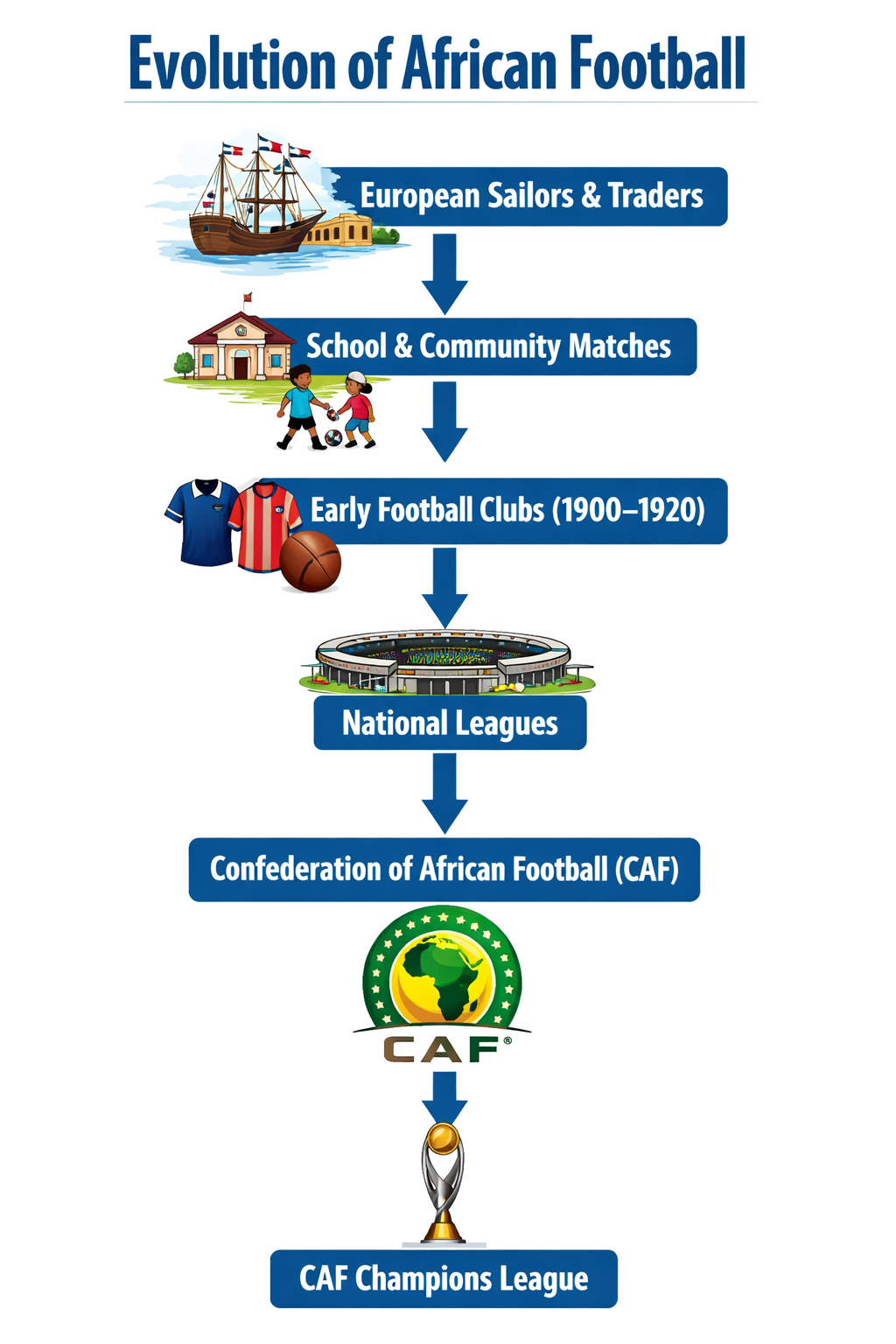
The expansion of football in Africa followed the same pattern seen in many parts of the world.
European workers and military personnel introduced the game in port cities such as:
Alexandria
Casablanca
Dakar
Lagos
Local players initially participated in informal matches. Over time these games became organized competitions within schools, military bases, and workers’ communities.
Missionary schools played an especially important role. Many of Africa’s early footballers first encountered the sport through school competitions.
By the early 1900s, clubs had begun forming across North and West Africa. These clubs later helped create national leagues after independence movements gained momentum in the mid-20th century.
A turning point came with the founding of the FIFA recognized African governing body, the Confederation of African Football.
CAF competitions gave historic clubs a continental platform, accelerating professional development across Africa.
Which Regions Founded the Earliest African Clubs?
North Africa produced most of the earliest African football clubs because it had stronger European trade links and colonial infrastructure. Egypt, Tunisia, Algeria, and Morocco became the continent’s earliest football centers.
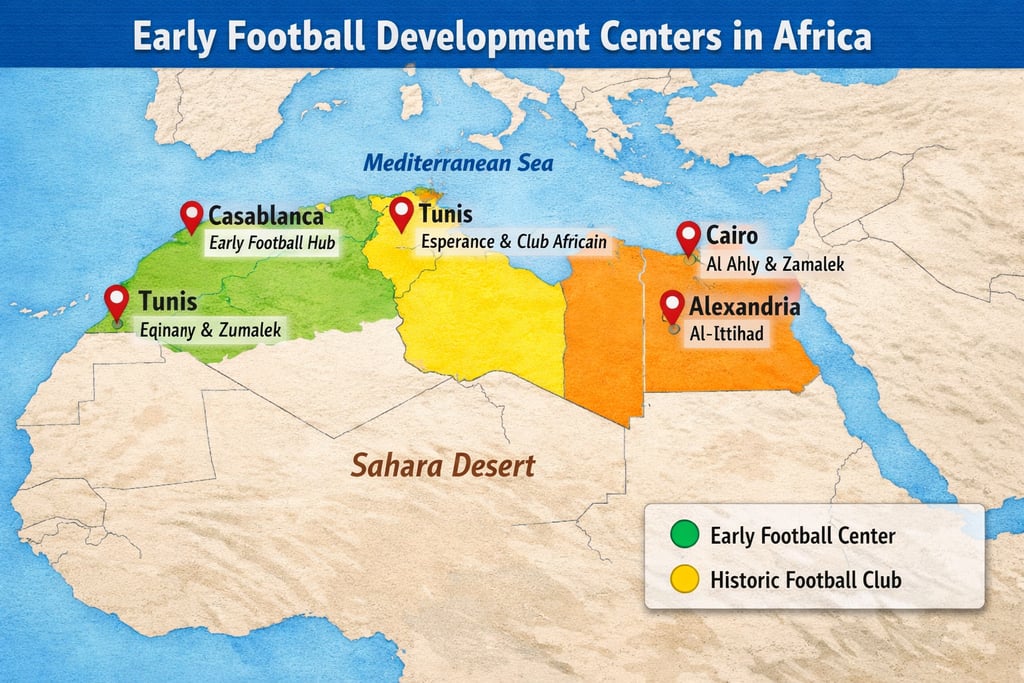
While football eventually spread across the entire continent, the earliest clubs appeared mainly in North Africa.
There are several reasons for this.
1. Mediterranean Trade Networks
North African port cities had direct contact with European traders. Sailors and merchants brought football equipment and organized matches during port visits.
Cities such as Alexandria and Tunis became early football hubs.
2. Colonial Administration
European colonial administrations built schools, military bases, and recreational clubs where football became popular.
Although these clubs initially served Europeans, local players quickly joined and formed their own teams.
3. Urban Infrastructure
Large cities offered stadiums, transportation networks, and organized leagues. This allowed clubs to survive long enough to become institutions.
Countries such as Senegal, Ghana, and Nigeria later followed with their own historic clubs in the 1920s and 1930s.
How Did These Historic Clubs Shape African Football?
The oldest African football clubs shaped the continent’s football culture by establishing leagues, training players, building stadiums, and creating rivalries that attracted massive fan support.
African football history is closely tied to broader social and cultural stories across the continent.
Platforms such as Tales Of Africa often explore these deeper narratives, showing how institutions like Al Ahly, Club Africain, or Espérance grew alongside independence movements, urban culture, and regional identity.
Looking at football through this wider historical lens helps explain why many African clubs are more than teams. They are long-standing community institutions that reflect the social history of the cities that built them.
Historic clubs played several crucial roles in developing African football.
Creating National Leagues
Many national leagues were formed around early clubs.
For example:
Egyptian Premier League
Tunisian Ligue Professionnelle
Moroccan Botola
These competitions provided the structure needed for professional football.
Developing Players
Many of Africa’s greatest players began their careers at historic clubs.
Examples include:
Mohamed Aboutrika (Al Ahly)
Tarek Dhiab (Espérance)
Hatem Trabelsi (Club Africain)
Youth academies at these clubs became talent pipelines for national teams.
Building Football Culture
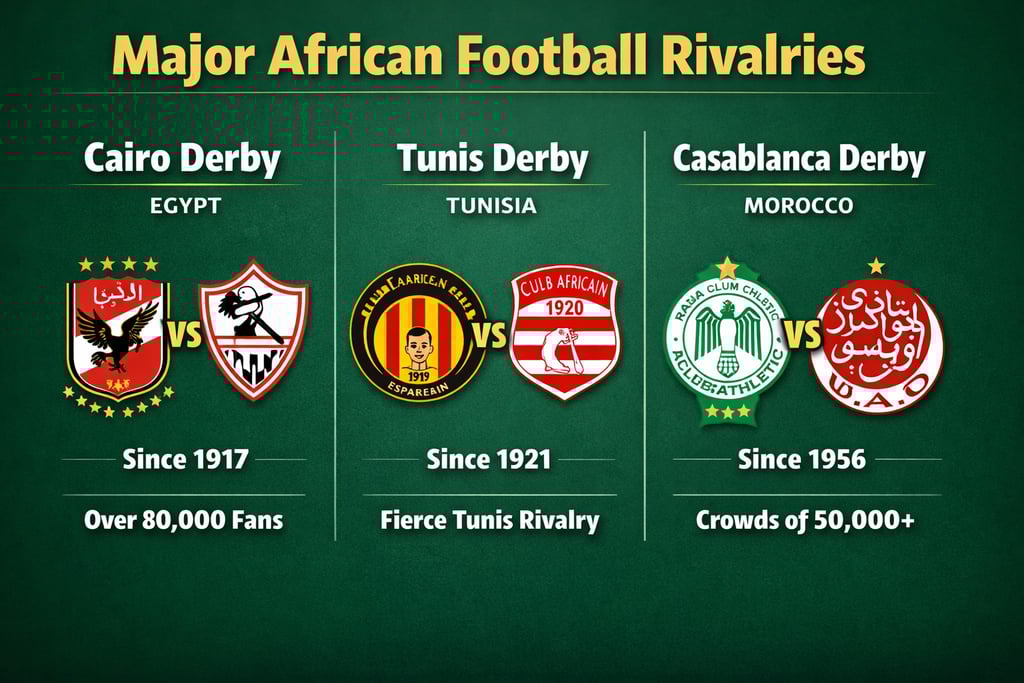
Historic clubs created rivalries that fueled fan passion.
Some famous African derbies include:
Cairo Derby (Al Ahly vs Zamalek)
Tunis Derby (Espérance vs Club Africain)
Casablanca Derby (Raja vs Wydad)
These rivalries generate massive stadium crowds and global television audiences.
What Makes an African Football Club Historically Significant?
A historically significant African football club typically has a long founding history, consistent participation in competitions, cultural influence, and notable achievements in domestic or continental tournaments.
Age alone does not define importance.
Several factors determine a club’s historical significance.
Continuous Operation
Some early clubs disappeared due to political or financial challenges. The most respected historic clubs are those that survived across decades.
Competitive Success
Winning domestic leagues and continental tournaments strengthens a club’s legacy.
For example, Al Ahly is widely considered Africa’s most successful club.
Cultural Impact
Historic clubs often represent communities, political movements, or regional identities.
This cultural role explains why football supporters in Africa show extraordinary loyalty to their teams.
Contribution to Player Development
Clubs that produce national team players contribute directly to African football’s global reputation.
For example, the BBC African Football coverage often highlights players who began their careers in historic African clubs before moving to Europe.
How African Football Clubs Became Global Brands
Many of Africa’s oldest clubs have evolved into international brands through continental success, massive fan bases, and player development systems that feed talent into European leagues.
The globalization of football transformed African clubs in several ways.
Television and Broadcasting
Satellite television allowed African matches to reach international audiences. Major CAF tournaments now attract viewers worldwide.
Player Transfers
African clubs often serve as stepping stones for players moving to European leagues.
For example, scouts regularly monitor players in competitions such as the CAF Champions League.
Digital Fan Communities
Social media platforms helped historic clubs build global fan bases, especially among diaspora communities.
Clubs like Al Ahly and Espérance now have millions of supporters across Africa, Europe, and the Middle East.
What Challenges Do Historic African Clubs Face Today?
Historic African football clubs face challenges including financial instability, infrastructure limitations, player transfers to Europe, and governance issues within domestic leagues.
Despite their long histories, many African clubs operate with limited financial resources.
Talent Drain
Talented young players often move to European leagues early in their careers. While this generates transfer income, it can weaken domestic competitions.
Stadium Infrastructure
Many historic stadiums require modernization to meet international standards.
Financial Sustainability
Sponsorship and broadcasting revenues remain lower than those in Europe or Asia.
However, CAF reforms and increased investment in African football may gradually strengthen club finances.
Frequently Asked Questions
What is the oldest football club in Africa?
Al Ahly SC, founded in 1907 in Cairo, Egypt, is widely considered the oldest major football club in Africa still operating today. It is also the most successful club in African football history.
Which African country has the oldest football clubs?
Egypt has the oldest football clubs in Africa. Early clubs such as Al Ahly, Zamalek, and Al-Ittihad Alexandria were founded in the early 1900s and helped establish organized football on the continent.
When did football first arrive in Africa?
Football arrived in Africa during the late 19th century through European sailors, traders, and colonial administrators. The sport quickly spread through schools, military bases, and port cities.
Which African club has the most CAF Champions League titles?
Al Ahly SC holds the record for the most CAF Champions League titles. The club is widely regarded as Africa’s most successful football team.
Are African football clubs older than European clubs?
No. European clubs such as Sheffield FC (1857) and Notts County (1862) were founded decades before African clubs. However, many African clubs from the early 1900s have equally rich histories.
Final Thoughts
The oldest football clubs in Africa are more than just sports teams. They are institutions that helped build the identity of African football.
From Cairo to Tunis, these clubs shaped leagues, rivalries, and generations of players. Their influence extends far beyond the pitch, connecting sport with culture, history, and national pride.
If you follow African football today, you are witnessing the continuation of traditions that began more than a century ago. The legacy of these early clubs still defines the passion, intensity, and global impact of the game across the continent.
About The Author
Mubashir Shakoor Godha is a blogger, digital marketer, and SEO specialist based in Pakistan. He started his journey in 2019 on Blogger and has since built and managed multiple websites that rank on Google and AI driven search platforms.
He is also the Founder of MSG Digitals, Top Rated Digital Marketing Agency in Pakistan, where he helps businesses grow through SEO, content strategy, and performance marketing.

usefulservices24@gmail.com
© 2026 Tales of Africa. All rights reserved. Powered by MSGDigitals.com