
Football History in Africa
Football in Africa began in the late 19th century when European colonists and missionaries introduced the sport. It spread rapidly through schools, ports, and cities, eventually forming clubs, leagues, and the Confederation of African Football.
SPORTS
Godha
3/16/20266 min read
Football History in Africa
Football is more than a sport in Africa. It has shaped national identity, political movements, and global football culture for more than a century.
If you watch an African match today, from a dusty street game in Lagos to a packed stadium in Cairo, you are seeing the result of a long historical journey. Understanding that journey reveals how football became the continent’s most influential sport.
How Did Football Begin in Africa?
Football first appeared in Africa during the late 1800s when European soldiers, traders, and missionaries introduced the game. Early matches were recorded in South Africa in 1862, before standardized rules were fully established.
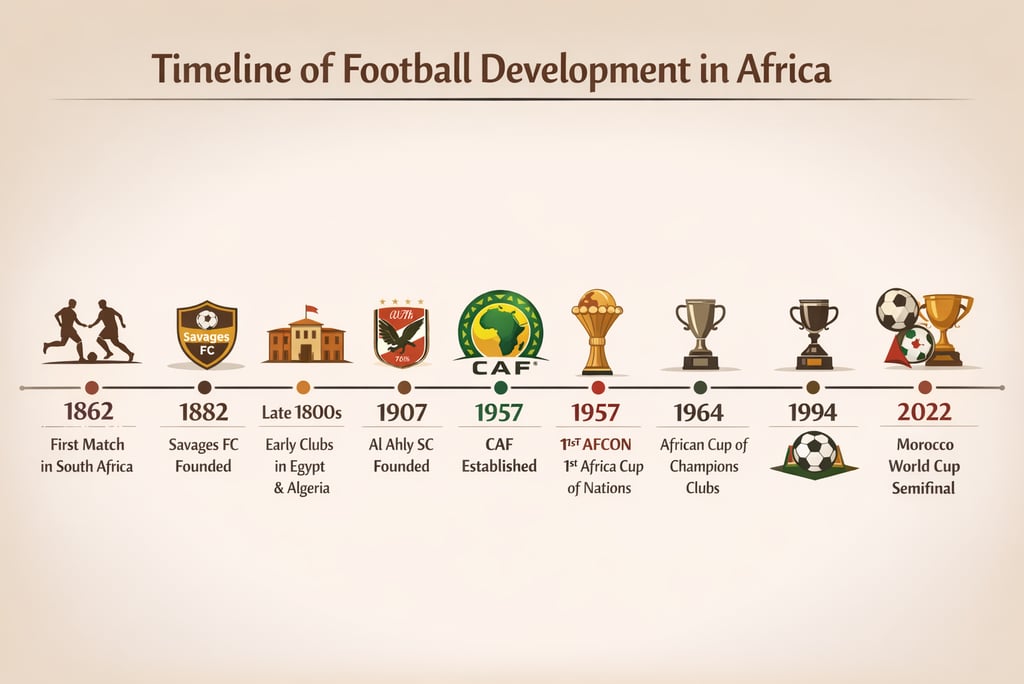
The earliest documented football match in Africa occurred in South Africa in 1862, played by soldiers and civil servants during the colonial period. At the time, the rules were still evolving because the official rules of association football were codified only in 1863 in England.
Initially, the sport resembled a mix of rugby and early soccer forms. But within a few decades, the standardized version of football spread across the continent.
Key Channels That Spread Football
Several social systems helped football expand across Africa:
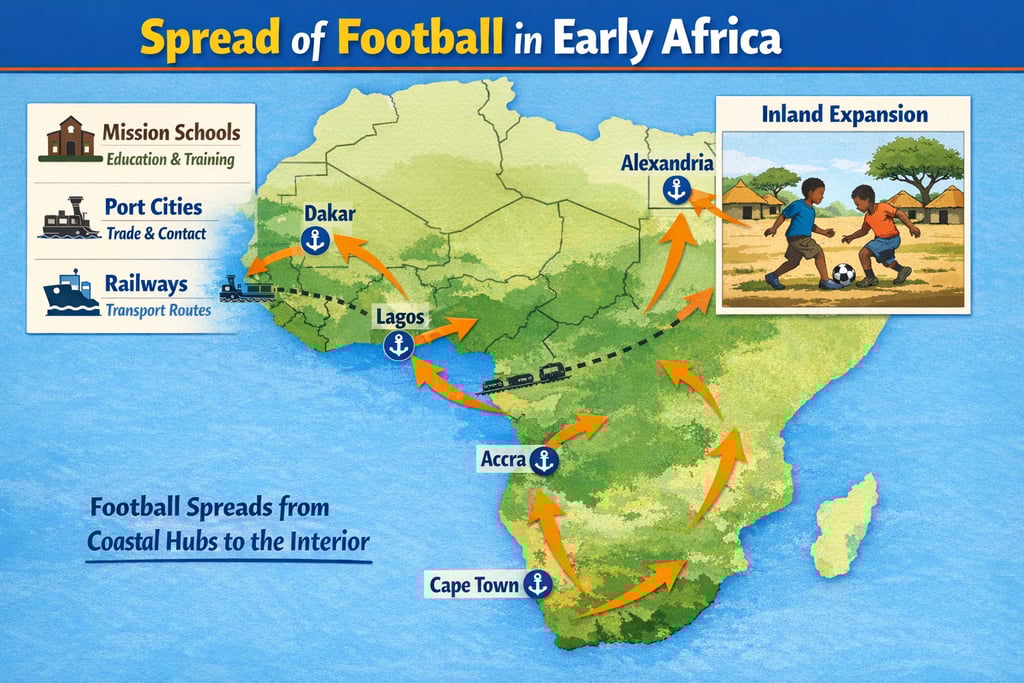
1. Mission Schools
Missionaries used football as part of physical education. Students learned teamwork, discipline, and organization through the game.
2. Colonial Administration
European administrators and military personnel played football recreationally. Local populations quickly adopted the sport.
3. Ports and Railways
Major port cities and railway networks connected communities, making inter-city matches possible.
These early influences explain why football first grew in coastal and urban centers such as:
Cape Town
Alexandria
Lagos
Dakar
Accra
Within a few decades, football was deeply embedded in African urban culture.
What Were the First Football Clubs in Africa?
The earliest football clubs in Africa emerged in the late 19th century. Notable early clubs include Savages FC in South Africa, L’Oranaise Club in Algeria, and Gezira SC in Egypt.
The establishment of football clubs marked the transition from informal matches to organized competition.
Some of the oldest clubs in African football history include:
Savages FC (South Africa) founded in 1882
L’Oranaise Club (Algeria) formed in the late 1800s
Gezira SC (Egypt) founded in Alexandria
These clubs helped introduce structured training, scheduled matches, and organized leagues.
Why Clubs Were Important
Football clubs served several roles in African societies:
Community identity
Clubs represented neighborhoods, ethnic groups, or worker communities.
Political organization
Some clubs became meeting spaces for anti-colonial movements.
Youth development
Young players gained social mobility through football.
A powerful example is Al Ahly SC, founded in Cairo in 1907. The club originally served as a gathering place for Egyptian students involved in nationalist politics during British colonial rule.
Over time, it became the most successful club in African football history.
How Did Football Become Popular Across Africa?
Football spread across Africa during the early 20th century through schools, workers’ clubs, urban migration, and colonial infrastructure.
By the early 1900s, football had become one of the most accessible sports on the continent.
Unlike sports that required expensive equipment, football needed only a ball and open space. That simplicity helped it spread rapidly.
Urbanization and Football Culture
Urban growth in cities such as:
Accra
Lagos
Cairo
Nairobi
Johannesburg
created dense communities where football could flourish.
Workers in ports, railways, and factories often formed football teams. These teams competed against others in nearby districts.
School Competitions
School tournaments helped establish football as a youth sport.
Many African football legends first developed their skills in:
mission schools
secondary school leagues
university competitions
By the 1930s, football was played across most regions of the continent.
When Was the Confederation of African Football Created?
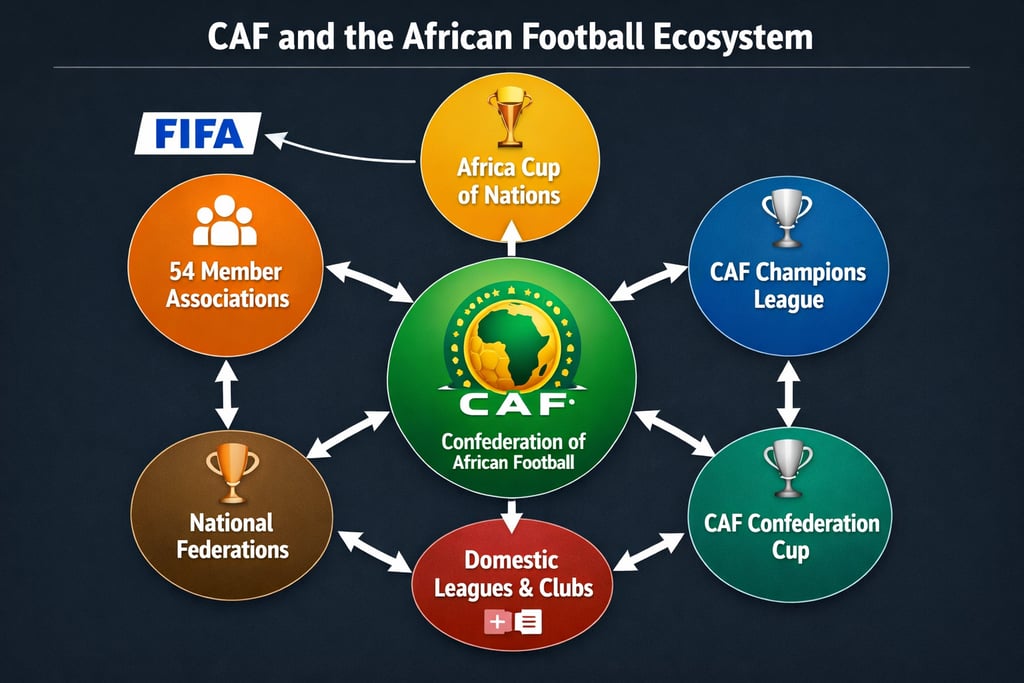
The Confederation of African Football (CAF) was founded in 1957 by Egypt, Sudan, Ethiopia, and South Africa to govern and organize football across the African continent.
As football grew in popularity, African nations needed a unified governing body.
In 1957, representatives from four countries met in Khartoum, Sudan, and established the Confederation of African Football (CAF).
The founding members were:
Egypt
Sudan
Ethiopia
South Africa
CAF became responsible for:
organizing continental tournaments
regulating competitions
representing African football within FIFA
Today, CAF includes 54 member associations, making it one of the largest football confederations in the world.
What Is the Africa Cup of Nations and Why Is It Important?
The Africa Cup of Nations (AFCON) is the main international football tournament for African national teams. It was first held in 1957 shortly after the creation of CAF.
The first AFCON tournament took place in 1957 with only three participating nations.
Over time, the tournament expanded to include teams from across the continent and became Africa’s most prestigious football competition.
Why AFCON Matters
AFCON plays several important roles:
Continental identity
The tournament celebrates African culture and unity.
Player development
Many African stars gained international recognition through AFCON.
Global exposure
European scouts closely watch the competition.
Legendary AFCON moments include:
Zambia’s emotional victory in 2012
Ivory Coast’s dramatic 1992 penalty shootout win
South Africa’s 1996 triumph after the end of apartheid
These moments helped define African football’s global reputation.
How Did African Clubs and Leagues Develop?
Domestic leagues and continental club competitions developed throughout the mid-20th century, allowing African teams to compete regionally and internationally.
As football matured, national leagues emerged in many countries.
Examples include:
Egyptian Premier League
South African Premier Division
Ghana Premier League
Nigerian Professional Football League
These leagues created a pathway for players to develop professionally.
Continental Club Competitions
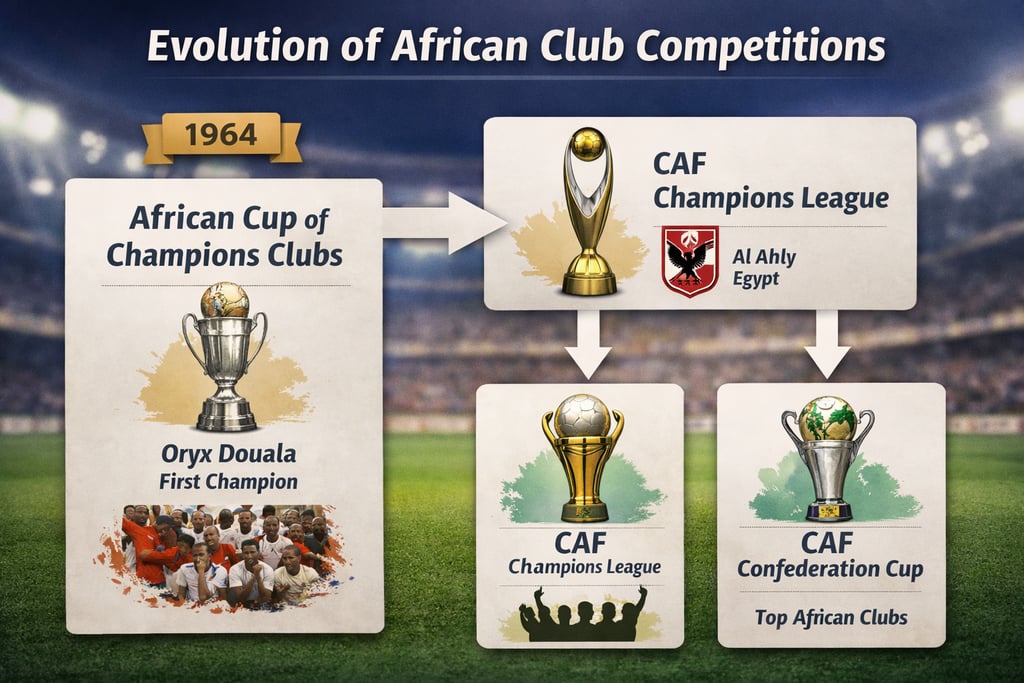
CAF later introduced major tournaments including:
African Cup of Champions Clubs (1964)
The first continental club competition in Africa.
Cameroonian club Oryx Douala won the first title.
CAF Champions League
The modern version of the competition.
CAF Confederation Cup
These tournaments strengthened competition between clubs from different African nations.
How Has Africa Influenced Global Football?
African football has significantly influenced the global game through player talent, tactical creativity, and cultural impact.
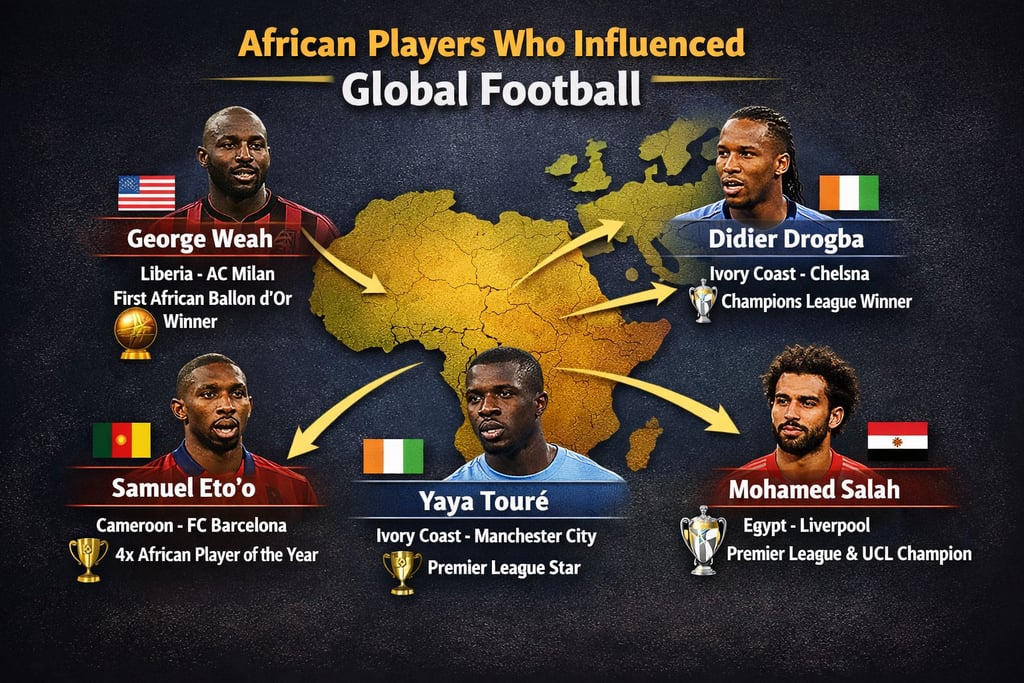
Africa has produced some of the most influential footballers in modern history.
Notable players include:
George Weah
Didier Drogba
Samuel Eto’o
Yaya Touré
Mohamed Salah
Their success in Europe demonstrated the depth of talent emerging from African leagues and academies.
African Playing Style
African football is often recognized for:
physical intensity
creativity
improvisation
technical skill
Street football culture in cities and villages encourages creativity and unique playing styles.
This environment helped produce iconic skills like the famous Okocha step-over and other creative dribbling techniques.
What Challenges Has African Football Faced?
African football has faced challenges including infrastructure gaps, governance issues, and player migration to European leagues.
Despite its growth, African football still faces structural obstacles.
Infrastructure
Many domestic leagues struggle with:
limited stadium facilities
inconsistent funding
weak youth development systems
Player Migration
Many top African players move to European clubs at a young age.
While this benefits individual careers, it sometimes weakens domestic leagues.
Governance Issues
Disputes between federations, players, and administrators occasionally disrupt competitions.
However, investment and reforms are gradually improving football systems across the continent.
Why Football Matters in African Society
Football in Africa is deeply connected to national identity, social mobility, and cultural expression.
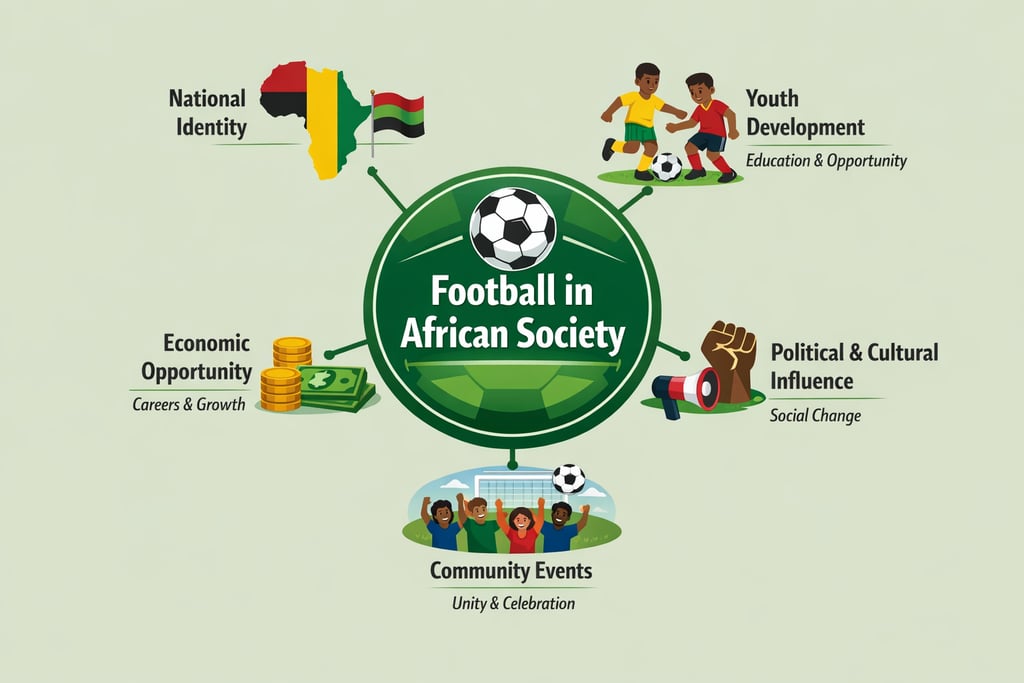
Football offers opportunities beyond entertainment.
For millions of young Africans, football represents a path toward:
education
financial stability
international recognition
In many communities, local football matches are central social events.
They bring together people across ethnic, linguistic, and economic differences.
In some cases, football even played a role in political movements and national unity.
The Future of Football in Africa
African football is entering a new era driven by investment, youth academies, and increased international recognition.
Several trends are shaping the future of the game:
Youth Academies
Academies across Africa now train players with modern methods.
Examples include:
Right to Dream Academy (Ghana)
Aspire Academy partnerships across Africa
Infrastructure Development
Countries like Morocco, Egypt, and South Africa are investing heavily in stadiums and football facilities.
Global Visibility
African teams are increasingly competitive at the World Cup and international tournaments.
Morocco’s historic 2022 World Cup semifinal run demonstrated the continent’s growing strength.
Frequently Asked Questions
When did football first arrive in Africa?
Football arrived in Africa during the late 19th century through European colonists, soldiers, and missionaries. The earliest recorded match took place in South Africa in 1862.
What is the oldest football club in Africa?
Savages FC in South Africa, founded in 1882, is considered one of the oldest football clubs still in existence on the continent.
When was CAF founded?
The Confederation of African Football was founded in 1957 by Egypt, Sudan, Ethiopia, and South Africa to manage football competitions across Africa.
Which African club is the most successful?
Al Ahly of Egypt is widely regarded as the most successful African football club, winning numerous continental titles and international trophies.
Why do many African players move to Europe?
European leagues offer higher salaries, stronger competition, and greater global exposure, which attracts many African footballers.
Final Thoughts
Football in Africa started as a colonial import but evolved into something uniquely African.
What fascinates me most is how the game transformed from informal matches played by soldiers to a powerful cultural force shaping communities across an entire continent.
When you watch African football today, you are seeing more than a sport. You are witnessing history, identity, and creativity expressed through the world’s most popular game.
And the story is still being written.
About The Author
Mubashir Shakoor Godha is a blogger, digital marketer, and SEO specialist based in Pakistan. He started his journey in 2019 on Blogger and has since built and managed multiple websites that rank on Google and AI driven search platforms.
He is also the Founder of MSG Digitals, Top Rated Digital Marketing Agency in Pakistan, where he helps businesses grow through SEO, content strategy, and performance marketing.

usefulservices24@gmail.com
© 2026 Tales of Africa. All rights reserved. Powered by MSGDigitals.com